
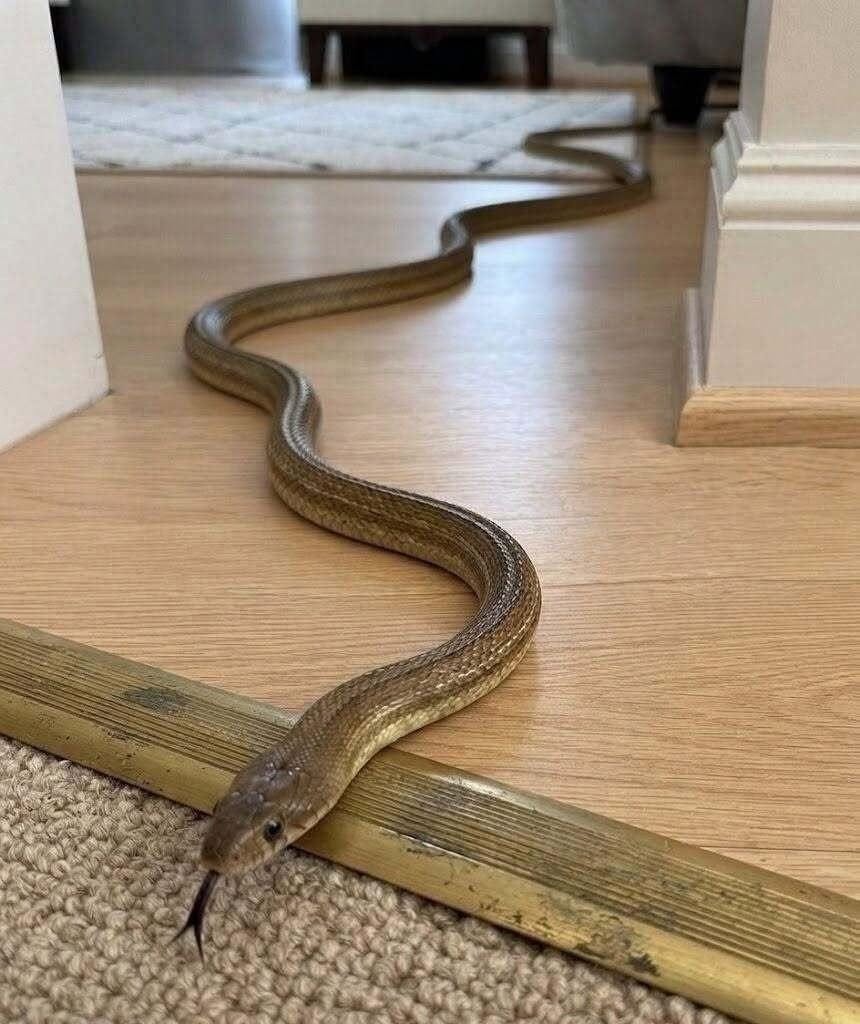
Children should be moved away from the area immediately.
Don’t encourage them to watch the snake from close range.
Don’t allow them to attempt to identify it themselves.
And don’t assume that a child understands how quickly a snake can move.
A simple rule works well:
If there’s a snake, step away and tell an adult.
Children can be curious, and curiosity can override caution.
What About Dogs and Cats?
Pets are often at greater risk because they may actively approach the snake.
A dog may bark at it.
A cat may try to pounce.
A curious pet may attempt to sniff or bite it.
Keep pets inside another room if possible.
If a pet has been bitten, seek veterinary care immediately.
Don’t wait for obvious symptoms if a venomous snake is possible.
And don’t attempt to treat a suspected venomous bite at home unless specifically instructed by a veterinarian or veterinary poison-control professional.
What You Should Never Do
When people panic, they may try improvised solutions.
Some of these can be dangerous.
Avoid:
Hitting the Snake
This can provoke defensive behavior and may also injure the animal unnecessarily.
Trying to Grab It
Never use your hands.
Using a Knife or Other Weapon
This creates unnecessary risk for you and anyone nearby.
Pouring Chemicals on It
Household chemicals are not a safe or humane solution.
Trying to Trap It With Your Body
Don’t block the snake’s movement with your feet or legs.
Chasing It
Chasing increases stress for both you and the animal.
Attempting Viral “Snake Removal” Tricks
Online videos aren’t a substitute for professional wildlife handling.
What If the Snake Is in Your Bedroom?
This can be especially frightening.
If you see a snake in your bedroom, don’t immediately jump onto the floor and run toward it.
Instead, create distance.
If you can safely leave the room, do so.
Keep other people and pets away.
Close the door if possible without getting near the snake.
Then contact an appropriate wildlife or animal-control professional.
Before going back into the room, don’t assume the snake has left simply because you can’t see it.
What If It’s in the Bathroom?
Bathrooms can sometimes attract animals because of moisture and plumbing access.
If you see a snake in a bathroom, step away.
Don’t reach behind the toilet.
Don’t open cabinets or put your hands around pipes looking for it.
If the snake is visible and contained, contact appropriate assistance.
If you have recurring wildlife problems around plumbing openings, doors, or vents, those areas can later be inspected and sealed appropriately.
What If It’s in the Garage?
Garages can provide excellent hiding places.
Boxes, tools, stored materials, gaps beneath doors, and rodent activity can all create conditions attractive to snakes.
If you find one in the garage: