

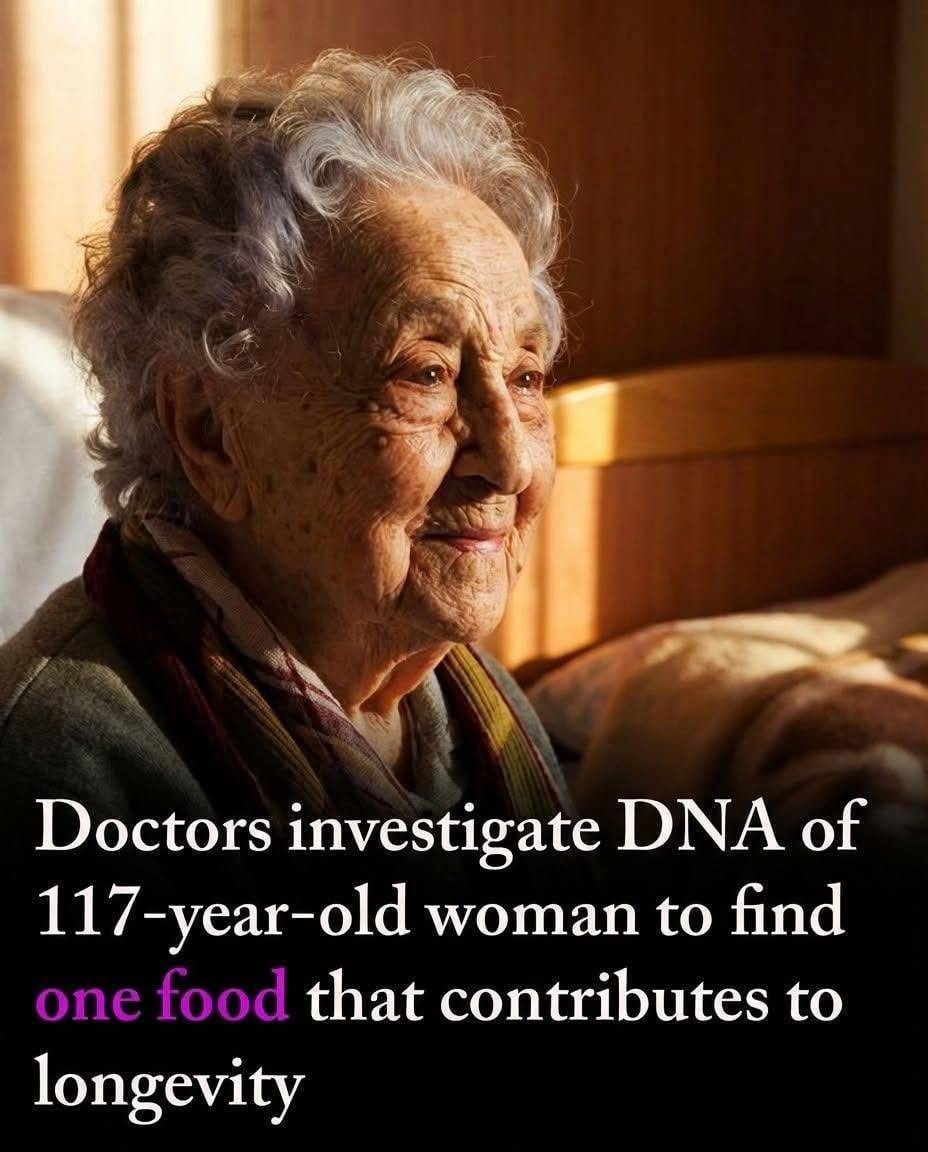
The quest for a longer, healthier life has captivated humanity for centuries. From ancient alchemists searching for the elixir of life to modern scientists analyzing genomes in high-tech laboratories, the desire to unlock the secrets of longevity remains as strong as ever. In recent years, one case has drawn extraordinary attention from the medical and scientific communities: the remarkable story of Maria Branyas Morera, a woman who lived to the astonishing age of 117. When she passed away in 2024, she was recognized as the world’s oldest living person, and her longevity sparked a wave of research aimed at understanding exactly how she managed to defy the odds of human aging.
Doctors and geneticists from the University of Barcelona embarked on an ambitious investigation into Maria’s DNA, her metabolism, and her gut microbiome. What they discovered was a fascinating combination of rare genetic advantages and lifestyle habits that may hold
clues for the rest of us. Among the many factors studied, one particular food emerged as a recurring theme in her daily diet—a humble, everyday item that researchers believe may have played a supporting role in her extraordinary lifespan. But before we get to that, it is essential to understand the full picture of what science has learned from Maria’s case.
Who Was Maria Branyas Morera?
Maria Branyas Morera was born on March 4, 1907, in San Francisco, California, to Spanish parents. Her family later returned to Spain, where she spent the majority of her life. She survived some of the most turbulent events in modern history, including the 1918 flu pandemic, the Spanish Civil War, World War II, and the COVID-19 pandemic. Remarkably, she contracted COVID-19 in 2020 at the age of 113 and recovered fully, becoming one of the oldest known survivors of the virus.
Maria spent her
final decades living in a nursing home in Olot, Catalonia, where she remained remarkably lucid and engaged with the world around her. She maintained an active presence on social media, where she shared her thoughts on life, health, and happiness with thousands of followers. When she died in August 2024, she left behind a legacy of wisdom and a scientific puzzle that researchers are still working to solve.
The DNA Investigation: What Scientists Found
The research team, led by Dr. Manel Esteller, a renowned geneticist and professor at the University of Barcelona, conducted a comprehensive analysis of Maria’s genetic material. Their findings, published in the journal Cell Reports Medicine, revealed several key factors that contributed to her exceptional longevity.
First and foremost, Maria possessed rare genetic variants that protected her cells from deterioration. Specifically, she had a unique combination of genes that enhanced her immune system’s ability to fight off
infections and reduced her risk of developing age-related diseases such as cancer and cardiovascular disease. Her telomeres—the protective caps at the ends of chromosomes that shorten with age—were unusually long for someone of her advanced years, suggesting that her cells were aging at a slower rate than normal.
Dr. Esteller explained that Maria’s genome contained variants that made her more resistant to inflammation, a key driver of aging and chronic disease. Her body also maintained healthy levels of “good” cholesterol (HDL) and low levels of “bad” cholesterol (LDL), which contributed to her cardiovascular health. Even at 117, her blood pressure and other vital markers were comparable to those of a much younger person.
The Role of the Gut Microbiome
Beyond her DNA, researchers were equally fascinated by Maria’s gut microbiome—the community of trillions of bacteria and other microorganisms that live in the digestive tract. The microbiome plays a critical role
in digestion, immunity, and overall health, and an imbalance in gut bacteria has been linked to numerous diseases, including obesity, diabetes, and dementia.
Maria’s gut microbiome was remarkably diverse and resembled that of a much younger individual. It contained high levels of beneficial bacteria, particularly Bifidobacterium, which is associated with healthy aging and reduced inflammation. This unique microbial profile was likely influenced by her diet, which was rich in fiber, fermented foods, and plant-based nutrients.
The “One Food” That Caught Researchers’ Attention
While the media often sensationalizes scientific findings by focusing on a single “magic” food, the reality is that Maria’s longevity was the result of a complex interplay of genetics, lifestyle, and diet. That said, one food did stand out in her daily routine: plain, natural yogurt.
Maria consumed yogurt every single day—typically three servings. This was not a random choice; yogurt had been a staple in her family’s
diet for generations. Her daughter, Rosa Moret, confirmed in interviews that her mother ate yogurt regularly throughout her life and credited it as a key component of her health regimen.
Why is yogurt so important? Yogurt is a fermented food rich in probiotics—live beneficial bacteria that support gut health. These probiotics help maintain a balanced microbiome, improve digestion, and strengthen the immune system. They also produce short-chain fatty acids that reduce inflammation and protect the lining of the gut. Given that Maria’s gut microbiome was exceptionally healthy, it is reasonable to conclude that her daily yogurt consumption played a meaningful role in maintaining that balance.
Additionally, yogurt is an excellent source of calcium, protein, and vitamin B12, all of which are essential for maintaining bone density, muscle mass, and cognitive function in older adults. It is also relatively low in calories and sugar when consumed in its plain, unsweetened form—exactly
the way Maria ate it.
However, it is crucial to note that yogurt alone did not make Maria live to 117. Her genetics were extraordinary, and her overall diet was exemplary. Still, yogurt was a consistent and important part of her daily nutrition, and it is one of the few dietary factors that researchers can point to with confidence.
Maria’s Broader Diet and Lifestyle
Maria’s diet followed the principles of the Mediterranean diet, which is widely regarded as one of the healthiest eating patterns in the world. Her meals consisted primarily of:
Fresh fruits and vegetables
Whole grains
Olive oil
Fish and lean proteins
Nuts and legumes
Fermented dairy products like yogurt
She avoided processed foods, refined sugars, and excessive red meat. She also practiced moderation in all things, never overeating and maintaining a healthy weight throughout her life.
Beyond diet, Maria credited several lifestyle habits for her longevity. She
emphasized the importance of “order, tranquility, good connections with family and friends, contact with nature, emotional stability, and having no worries or regrets.” She also famously advised people to “stay away from toxic people,” highlighting the importance of mental and emotional well-being.
Maria remained physically active well into her 100s, doing exercises, walking, and even playing the piano. She kept her mind sharp by reading, writing, and engaging in conversations. She was also deeply spiritual, though she did not attribute her longevity to any single religious practice.
What Science Says About Yogurt and Longevity
Maria’s case is not the first to suggest a link between fermented dairy products and longevity. Populations around the world known for their long lifespans—such as those in Okinawa, Japan; Sardinia, Italy; and Ikaria, Greece—regularly consume fermented foods, including yogurt, kefir, and cheese.
Scientific studies have consistently shown that probiotics and fermented foods offer numerous health
benefits:
Improved digestion: Probiotics help break down food and absorb nutrients more efficiently.
Enhanced immune function: A healthy gut microbiome is essential for a strong immune system.
Reduced inflammation: Chronic inflammation is a root cause of many age-related diseases, and probiotics help keep it in check.
Better mental health: The gut-brain axis means that a healthy gut can improve mood and cognitive function.
Weight management: Probiotics may help regulate appetite and metabolism.
A 2020 study published in the Journal of the American College of Nutrition found that regular consumption of yogurt was associated with a lower risk of cardiovascular disease, type 2 diabetes, and overall mortality. Another study, published in Nature, found that centenarians often have distinct gut microbiomes enriched with beneficial bacteria, which may protect against aging-related diseases.
The Limitations of the “One Food” Narrative
While it is tempting to reduce Maria’s longevity to a single food, scientists caution
against this oversimplification. Dr. Esteller and his team emphasized that genetics played the dominant role in Maria’s case. Her rare genetic variants gave her a significant advantage that no amount of yogurt could replicate in someone without those genes.
Moreover, longevity is influenced by a complex web of factors, including:
Genetics (approximately 20-30% of lifespan)
Lifestyle (diet, exercise, sleep, stress management)
Environment (pollution, access to healthcare, socioeconomic status)
Social connections (relationships, community, purpose)
Luck (avoiding accidents and infections)
No single food, no matter how healthy, can override these factors. The “one food” narrative is appealing because it offers a simple solution to a complex problem, but it is ultimately misleading.
Practical Takeaways for the Rest of Us
So, what can we learn from Maria’s story? While we cannot change our genes, we can adopt habits that support healthy aging:
Eat more fermented foods: Incorporate plain yogurt, kefir, sauerkraut, and kimchi
into your diet to support gut health.
Follow a Mediterranean-style diet: Focus on plants, healthy fats, and lean proteins while minimizing processed foods and added sugars.
Stay active: Regular physical activity, including strength training and balance exercises, is essential for maintaining mobility and independence.
Prioritize mental health: Manage stress, nurture relationships, and find purpose in your daily life.
Get regular check-ups: Preventive care can catch health problems early and keep you on track.
Avoid toxins: Limit alcohol, don’t smoke, and minimize exposure to environmental pollutants.
Conclusion
The investigation into Maria Branyas Morera’s DNA has provided valuable insights into the biology of aging. Her rare genetic variants, healthy gut microbiome, and lifelong adherence to a Mediterranean diet all contributed to her remarkable 117-year lifespan. While yogurt was a consistent part of her daily routine and likely played a supporting role in her gut health, it was not a magic bullet. Maria’s
longevity was the result of a combination of factors—genetics, diet, lifestyle, and perhaps a bit of luck.
Her story is a reminder that while we cannot control our genes, we can make choices that support our health and well-being at every stage of life. And if there is one simple, accessible habit we can borrow from Maria, it is this: enjoy a serving of plain yogurt, stay active, cherish your loved ones, and avoid toxic people. That may not guarantee 117 years, but it is a recipe for a life well lived.