

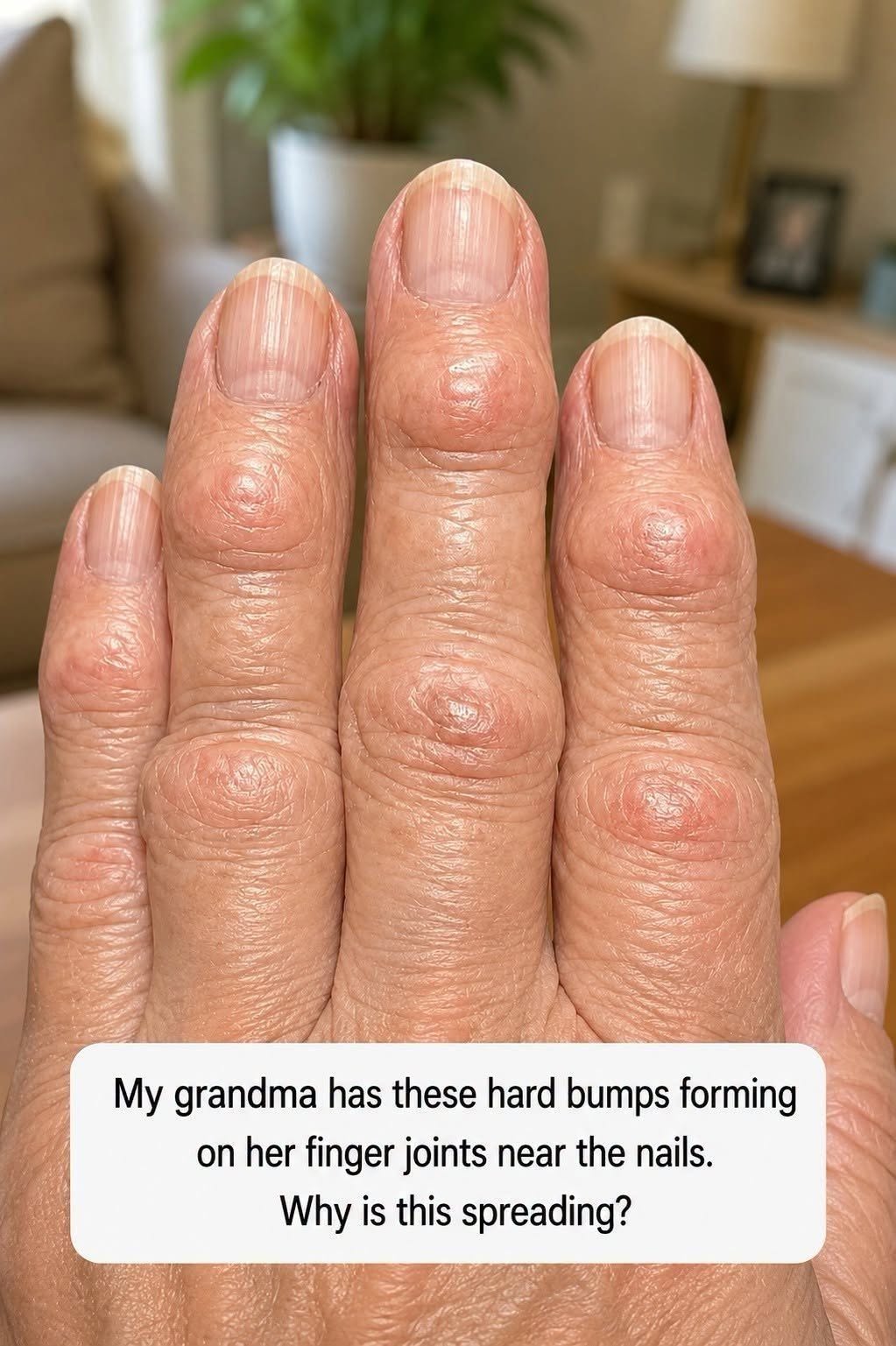
Hard Bumps on Your Finger Joints …Here’s What They Could Mean
As we get older, our bodies naturally change—and our hands are no exception. One common change many people notice is the development of hard, bony bumps on the joints closest to the fingertips. These bumps may start on one finger and gradually appear on others, making everyday tasks like buttoning clothes or opening jars more difficult.
Although they can look concerning, these growths are often a common sign of osteoarthritis, the most prevalent form of arthritis.
What Are Heberden’s Nodes?
The hard bumps that develop on the joints nearest the fingernails are called Heberden’s nodes.
They form when the cartilage that cushions the finger joints gradually wears away. As the protective cartilage breaks down, the bones begin rubbing against each other. In response, the body produces extra bone around the joint, creating the firm enlargements that become visible beneath the skin.
Unlike soft swelling caused by inflammation, Heberden’s nodes are bony growths and usually feel hard to the touch.
Why Do They Appear on More Fingers Over Time?
Osteoarthritis is a progressive condition, meaning it can worsen gradually over the years.
As joint wear continues, additional finger joints may become affected, causing more nodes to develop.
Several factors can increase the likelihood of developing Heberden’s nodes, including:
Aging
A family history of osteoarthritis
Years of repetitive hand movements
Previous finger injuries
Women—particularly after the age of 45 and around menopause—are more likely than men to develop these bony enlargements.
Common Symptoms
In addition to the visible bumps, people with Heberden’s nodes may experience:
Pain or tenderness in the finger joints
Stiffness, especially in the morning
Swelling around the affected joints
Reduced flexibility
Difficulty gripping or holding small objects
Over time, the affected fingers may gradually change shape as the joints become enlarged.
Could It Be Something Else?
While Heberden’s nodes are most commonly associated with osteoarthritis, other medical conditions can also affect the finger joints.
For example, rheumatoid arthritis, an autoimmune disease, may cause pain, swelling, stiffness, and joint deformities. However, it typically affects different joints and often involves both hands symmetrically.
If your symptoms appear suddenly, become extremely painful, or are accompanied by significant swelling, redness, fever, or unusual fatigue, it’s important to seek medical evaluation to determine the underlying cause.
How Are Heberden’s Nodes Diagnosed?
Doctors can often identify Heberden’s nodes through a physical examination.
To confirm the diagnosis or assess the severity of joint damage, your healthcare provider may recommend X-rays. These images can reveal:
Cartilage loss
Bone spurs (osteophytes)
Narrowing of the joint space
Other changes associated with osteoarthritis
In some cases, additional tests may be performed to rule out other forms of arthritis.
Managing the Symptoms
Although osteoarthritis cannot currently be cured, several treatments and lifestyle strategies can help reduce discomfort and improve hand function.
These may include:
Over-the-counter pain relievers or anti-inflammatory medications (when appropriate)
Applying warm or cold compresses
Wearing finger splints for support during certain activities
Gentle hand and finger exercises to maintain flexibility
Using ergonomic kitchen tools and household devices to reduce strain on the joints
If symptoms significantly interfere with daily activities, your healthcare provider may recommend additional therapies or medications.
When Should You See a Specialist?
Consider consulting a rheumatologist or hand specialist if:
Your pain becomes severe or persistent.
Finger movement becomes increasingly limited.
Your joints change shape rapidly.
You develop significant swelling, warmth, or redness.
Daily tasks become difficult because of reduced hand function.
Early evaluation can help ensure an accurate diagnosis and provide treatment options that may improve comfort and preserve mobility.
Can You Prevent Heberden’s Nodes?
While you can’t completely prevent osteoarthritis, you may be able to support joint health by:
Keeping your hands active with gentle range-of-motion exercises
Avoiding repetitive strain whenever possible
Maintaining a healthy body weight
Eating a balanced diet rich in nutrients that support bone and joint health
Protecting your hands from injury during work and recreational activities
These healthy habits may help maintain joint function and reduce unnecessary stress on your hands.
Final Thoughts
Finding hard bumps on your finger joints can be unsettling, but in many cases they are a common feature of osteoarthritis. Although Heberden’s nodes may gradually become more noticeable over time, many people successfully manage their symptoms through lifestyle adjustments, hand exercises, and appropriate medical care.
If you’re experiencing persistent pain, increasing stiffness, or rapid changes in your finger joints, don’t ignore the symptoms. A healthcare professional can determine the cause, recommend appropriate treatment, and help you keep your hands functioning as comfortably as possible.