

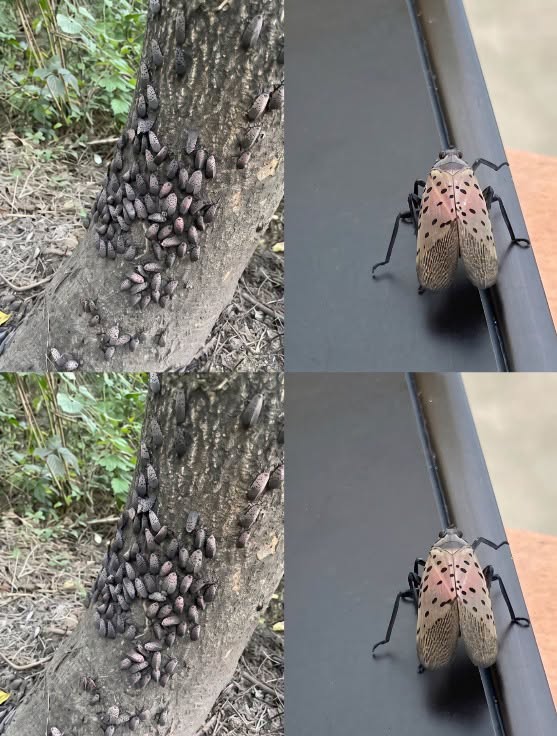
Its wings are covered with dark spots, and when it opens them, flashes of vivid red appear underneath. It’s the kind of insect that might make you stop in the garden for a closer look.
But there’s a reason gardeners, farmers, and environmental officials pay close attention when this insect appears.
The spotted lanternfly (Lycorma delicatula) is an invasive insect that feeds on plant sap, and large populations can put considerable stress on trees, vines, and other plants. It was first detected in the United States in Pennsylvania in 2014 and has since expanded its range.
So if you see one, don’t panic—but don’t simply assume it’s a harmless garden visitor, either.
What Is a Spotted Lanternfly?
The spotted lanternfly is native to parts of Asia. It belongs to the planthopper group and uses piercing-sucking mouthparts to feed on the sap of plants.
The problem isn’t necessarily one individual insect. The bigger concern is what can happen when populations become large.
These insects can gather in significant numbers on trees and other plants, feeding repeatedly and producing a sticky substance called honeydew.
That honeydew can create an entirely different problem.
Why Are Lanternflies Considered a Problem?
When spotted lanternflies feed, they remove plant sap. Heavy feeding can weaken affected plants and trees.
They also excrete honeydew as they feed. This sugary residue can coat leaves, branches, outdoor furniture, vehicles, and surfaces beneath infested plants.
And then comes the unpleasant part: honeydew can encourage the growth of sooty mold.
Sooty mold produces a dark coating on surfaces and plant foliage. A heavy buildup can interfere with the plant’s ability to use sunlight efficiently.
This combination of sap feeding, honeydew, and mold is one reason serious infestations are taken so seriously.