

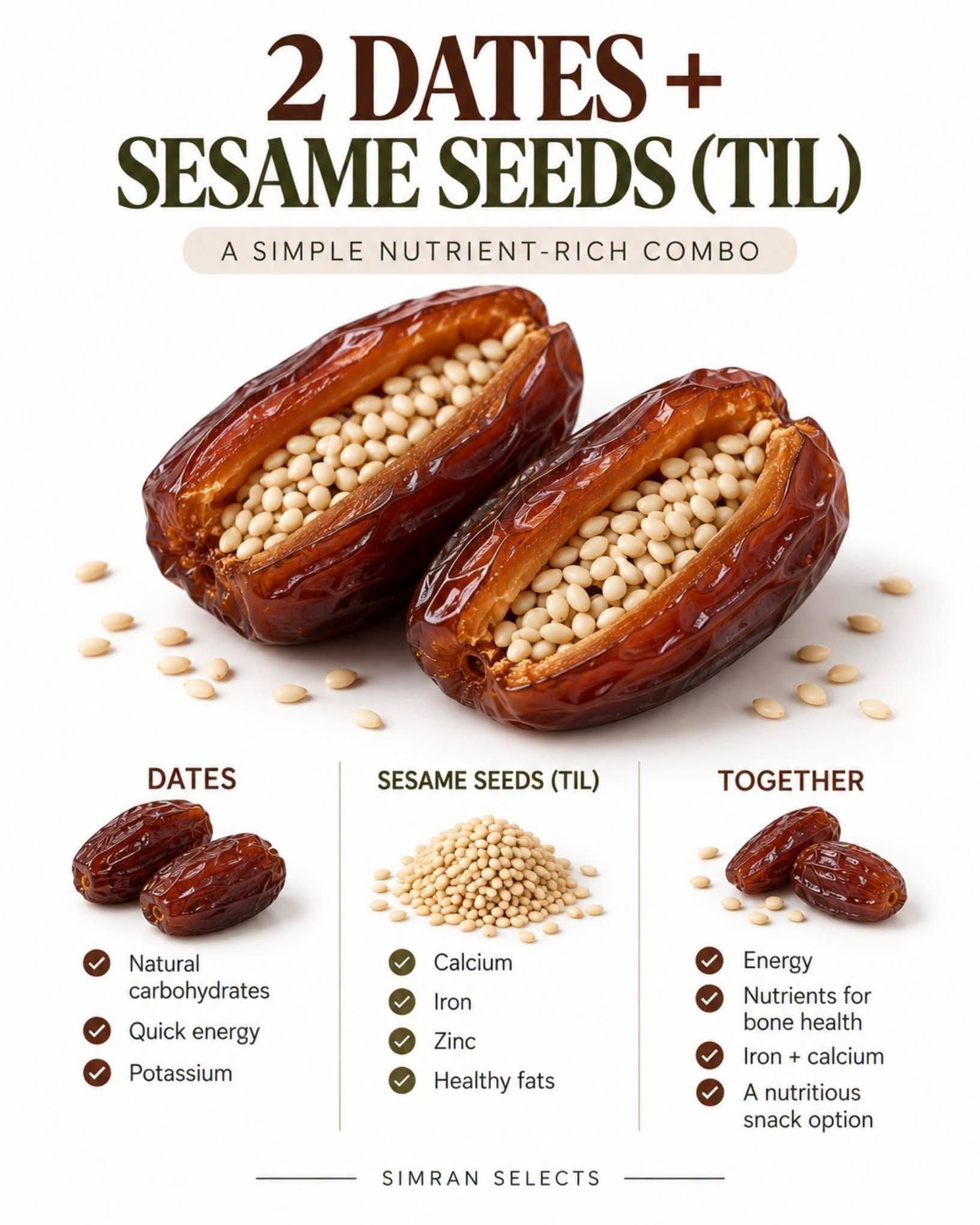
- Sometimes, the simplest foods can create the most satisfying snacks. You do not always need a long list of ingredients or complicated recipes to enjoy something delicious and nourishing. A simple combination of two dates and sesame seeds can bring together natural carbohydrates, minerals, healthy fats, and a satisfying texture in just a few bites. 🤎
- 🌴 Dates — naturally sweet and energizing
- Dates are naturally sweet fruits that contain carbohydrates, making them a convenient source of energy. They also provide potassium and other nutrients as part of a balanced diet.
- Because dates are naturally sweet and chewy, they can be enjoyed on their own or paired with other foods. Their soft texture makes them especially easy to combine with crunchy ingredients such as sesame seeds.
- Two dates can make a convenient snack when you want something naturally sweet between meals. They can also be paired with nuts, seeds, yogurt, or fruit to create a more varied snack.
- 🌱 Sesame seeds (til) — small seeds with valuable nutrients
- Sesame seeds may be tiny, but they contain a variety of nutrients. They are particularly known for their calcium content and also provide iron, zinc, and healthy fats.
- Their slightly nutty flavor makes them an easy addition to many foods. You can sprinkle sesame seeds over salads, oatmeal, yogurt, toast, vegetables, or simply enjoy them with dates.
- Sesame seeds can also provide some protein and fiber, although the exact amount depends on the serving size and the type of sesame seeds used.
- ✨ Why combine dates and sesame seeds?
- Pairing dates with sesame seeds creates a delicious contrast between soft and crunchy textures. The natural sweetness of the dates complements the slightly nutty flavor of sesame seeds.
- From a nutritional perspective, the combination brings together different types of nutrients. Dates contribute carbohydrates and potassium, while sesame seeds contribute minerals such as calcium, iron, and zinc, along with unsaturated fats.
- This does not mean that the combination is a complete meal or that it provides every nutrient your body needs. Rather, it can be a simple addition to an overall balanced eating pattern.
- 🥣 An easy snack idea
- To make this snack, simply take two dates and sprinkle them with sesame seeds. You can also gently press the seeds onto the surface of the dates so they stick.
- For extra variety, you can remove the pits from the dates and fill them with sesame seeds or a small amount of another ingredient you enjoy. A spoonful of plain yogurt on the side can also turn this simple snack into a more substantial option.
- You can prepare a few portions in advance and keep them ready for moments when you want something quick and convenient.
- 🌿 Keep portions and variety in mind
- Although dates and sesame seeds contain valuable nutrients, portion size still matters. Dates are naturally rich in sugars and carbohydrates, while sesame seeds are relatively energy-dense because they contain fats.
- The nutritional value of your snack will depend on the exact quantity and type of ingredients you use. Whole sesame seeds, hulled sesame seeds, and toasted sesame seeds can have somewhat different nutritional profiles.
- As with any individual food, it is best to look at this snack as part of your overall diet rather than as a special food that provides all the nutrition you need.
- 🤍 Simple food can still be satisfying
- You do not need complicated recipes to make a tasty snack. Two naturally sweet dates combined with nutrient-containing sesame seeds can be an easy, flavorful option when you want something quick.
- The best approach is to enjoy a variety of foods throughout the day, including fruits, vegetables, whole grains, legumes, nuts, seeds, and other sources of protein and healthy fats.
- 🌴🌱 Two dates. A sprinkle of sesame seeds. One simple snack. ✨
- Sometimes, keeping things simple is exactly what makes a snack enjoyable. 🤎
- This information is for general awareness only and is not a substitute for professional medical advice. Individual nutritional needs vary, and people with allergies, dietary restrictions, or specific health conditions should choose foods according to their personal needs and professional guidance.
[related-posts-thumbnails]