

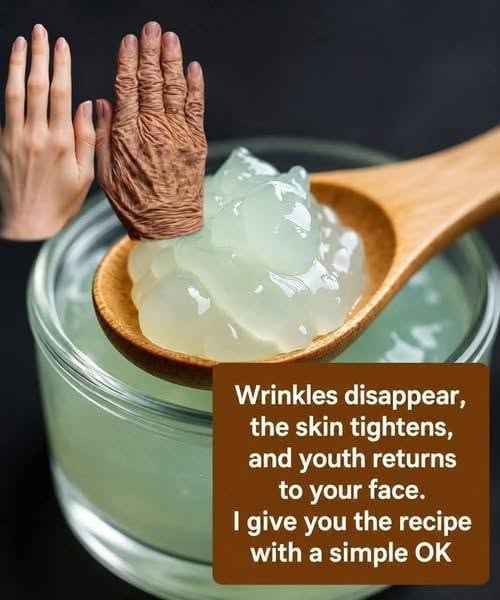
Social media is flooded with promises of eternal youth. Among the most persistent and tantalizing claims is a viral post featuring a dramatic before-and-after image: a wrinkled, aged hand next to a smooth, youthful one, hovering over a jar of mysterious green gel. The caption boldly declares: “Wrinkles disappear, the skin tightens, and youth returns to your face. I give you the recipe with a simple OK.”
It is a compelling promise. Who wouldn’t want to turn back the clock with a simple, homemade remedy? But as with most viral anti-aging claims, the truth is far more nuanced. While the specific “miracle” recipe varies—some versions tout aloe vera and honey, others claim flaxseed gel or egg whites—the underlying question remains: Can a topical homemade mask truly erase wrinkles and restore youthful skin?
In this article, we will explore the science behind skin aging, examine the ingredients commonly found in these
viral recipes, separate fact from fiction, and provide evidence-based strategies for maintaining healthy, youthful-looking skin.
The Reality of Skin Aging
Before evaluating any anti-aging remedy, it is essential to understand why skin ages in the first place. Skin aging is a complex biological process influenced by two primary factors: intrinsic aging (the natural passage of time) and extrinsic aging (environmental damage, primarily from the sun).
Intrinsic aging is driven by genetics and the gradual decline of cellular function. As we age, our skin produces less collagen and elastin—the proteins that provide structure, firmness, and elasticity. The skin also loses hyaluronic acid, a molecule that retains moisture and keeps the skin plump. Additionally, the rate of skin cell turnover slows down, leading to a dull, uneven complexion. These changes are inevitable and cannot be reversed by topical treatments alone.
Extrinsic aging, on the other hand, is largely preventable. Exposure to ultraviolet (
UV) radiation from the sun is the leading cause of premature skin aging, accounting for up to 90% of visible aging. UV rays damage collagen and elastin fibers, cause hyperpigmentation, and increase the risk of skin cancer. Other extrinsic factors include smoking, pollution, poor diet, and chronic stress.
Understanding this distinction is crucial. A homemade mask might temporarily hydrate the skin or provide a mild exfoliating effect, but it cannot reverse the structural damage caused by years of sun exposure or the natural decline of collagen production.
The Allure of Viral “Miracle” Recipes
The viral post in question features a jar of translucent green gel, which resembles aloe vera. The accompanying text promises that wrinkles will disappear and youth will return to your face. The call to action—”just say OK”—is a classic engagement tactic designed to boost the post’s reach on social media algorithms.
These posts are highly
effective because they tap into a universal desire: the wish to look younger without expensive treatments or invasive procedures. They offer hope, simplicity, and the illusion of a secret that “doctors don’t want you to know.” But what is actually in these recipes, and do they work?
Common Ingredients in Viral Anti-Aging Recipes
While the exact recipe varies, most viral anti-aging masks contain a combination of the following ingredients:
- Aloe Vera
Aloe vera is a succulent plant known for its soothing, hydrating properties. The gel inside its leaves contains vitamins, minerals, antioxidants, and polysaccharides that can help calm inflammation and moisturize the skin. Some studies suggest that aloe vera can stimulate collagen production and improve skin elasticity. However, the evidence is limited, and aloe vera alone cannot erase deep wrinkles. - Honey
Honey is a natural humectant, meaning it draws moisture from the air into the skin. It also has antibacterial
- and anti-inflammatory properties, making it beneficial for acne-prone or irritated skin. Raw honey contains antioxidants that can help protect the skin from oxidative stress. Like aloe vera, honey can improve hydration and skin texture, but it is not a wrinkle eraser.
- Egg Whites
Egg whites are a popular ingredient in DIY face masks because they contain albumin, a protein that can temporarily tighten the skin as it dries. This creates a short-lived firming effect, but it does not penetrate the skin deeply enough to stimulate collagen production or reduce wrinkles permanently. - Flaxseed Gel
Flaxseed gel is rich in omega-3 fatty acids and antioxidants, which can nourish and soothe the skin. It also has a gelatinous texture that can temporarily plump up fine lines. However, like egg whites, the effect is superficial and temporary. - Banana or Avocado
Bananas and avocados are rich in vitamins, minerals, and healthy fats that can moisturize
- and nourish the skin. They are excellent for hydration, but they do not have the ability to reverse structural aging.
What These Recipes Can and Cannot Do
To be fair, many of these natural ingredients do offer legitimate benefits for the skin. They can:
Hydrate: Ingredients like aloe vera, honey, and avocado can improve skin moisture levels, making the skin look plumper and more radiant.
Soothe: Anti-inflammatory ingredients can calm redness and irritation.
Exfoliate: Some ingredients contain mild acids that can gently exfoliate dead skin cells, revealing brighter skin underneath.
Provide antioxidants: Vitamins C and E found in natural ingredients can help protect the skin from free radical damage.
However, what they cannot do is equally important:
Erase deep wrinkles: No topical ingredient can permanently eliminate wrinkles caused by collagen loss and sun damage.
Permanently tighten skin: Temporary firming effects from egg whites or gelatin do not last.
Reverse aging:
The biological clock cannot be turned back by a face mask.
The Placebo Effect and Temporary Results
One reason these viral recipes seem to “work” is the placebo effect. When people believe they are doing something good for their skin, they may perceive improvements that are not objectively measurable. Additionally, many of these masks provide temporary hydration and plumping, which can make fine lines look less noticeable for a few hours. This temporary effect is often mistaken for permanent improvement.
Furthermore, the before-and-after images used in these viral posts are often misleading. They may be taken under different lighting conditions, with different camera angles, or even digitally altered. In some cases, the “before” image is of a completely different person or a hand that has been intentionally aged with makeup.
The Risks of DIY Skincare
While natural ingredients are generally safe, DIY skincare is not without risks. Some potential problems
include:
Allergic reactions: Natural ingredients can still cause allergic contact dermatitis, especially in people with sensitive skin.
Irritation: Ingredients like lemon juice or apple cider vinegar can disrupt the skin’s pH balance and cause chemical burns.
Infection: Homemade products lack preservatives, making them susceptible to bacterial and fungal growth.
Lack of efficacy: Without proper formulation, active ingredients may not penetrate the skin effectively.
Evidence-Based Strategies for Youthful Skin
If you want to genuinely improve the appearance of your skin and reduce the signs of aging, dermatologists recommend the following evidence-based approaches:
- Sun Protection
The single most effective way to prevent premature aging is to protect your skin from the sun. Use a broad-spectrum sunscreen with an SPF of 30 or higher every day, even on cloudy days. Wear protective clothing, hats, and sunglasses, and avoid tanning beds. - Retinoids
Retinoids, derived from vitamin A, are among the most well-studied anti-aging ingredients.
- They stimulate collagen production, increase cell turnover, and reduce the appearance of fine lines and wrinkles. Prescription-strength retinoids like tretinoin are the gold standard, but over-the-counter retinol products can also be effective.
- Vitamin C
Vitamin C is a potent antioxidant that protects the skin from free radical damage and helps brighten hyperpigmentation. It also plays a role in collagen synthesis. Look for serums containing 10-20% L-ascorbic acid. - Hyaluronic Acid
Hyaluronic acid is a humectant that can hold up to 1,000 times its weight in water. Applying it topically can plump up the skin and reduce the appearance of fine lines. - Chemical Exfoliants
Alpha-hydroxy acids (AHAs) like glycolic acid and beta-hydroxy acids (BHAs) like salicylic acid can gently exfoliate dead skin cells, revealing smoother, brighter skin. They also stimulate collagen production over time. - Moisturizers
Keeping the skin well-moisturized is essential for maintaining a healthy skin barrier. Look for moisturizers containing
- ceramides, glycerin, or squalane.
- Healthy Lifestyle
A balanced diet rich in fruits, vegetables, and healthy fats, regular exercise, adequate sleep, and stress management all contribute to healthy skin. Avoid smoking and excessive alcohol consumption. - Professional Treatments
For more significant improvements, dermatologists offer treatments such as chemical peels, microneedling, laser therapy, and injectables like botulinum toxin and dermal fillers. These procedures should only be performed by qualified professionals.
Conclusion
The viral claim that a simple homemade recipe can make wrinkles disappear and restore youthful skin is an exaggeration. While natural ingredients like aloe vera, honey, and egg whites can offer temporary hydration and mild benefits, they cannot reverse the biological processes of aging or undo years of sun damage.
That said, there is no harm in enjoying a soothing DIY face mask as part of a broader skincare routine—as long as you have realistic expectations and patch-test new ingredients. The real
secrets to youthful skin are far less glamorous: sun protection, proven active ingredients like retinoids and vitamin C, a healthy lifestyle, and consistency.
So, the next time you see a post promising that “youth returns to your face” with a simple “OK,” remember that real skin health requires more than a click. It requires knowledge, patience, and a commitment to evidence-based care. Your skin will thank you for it.