
Engaging Introduction
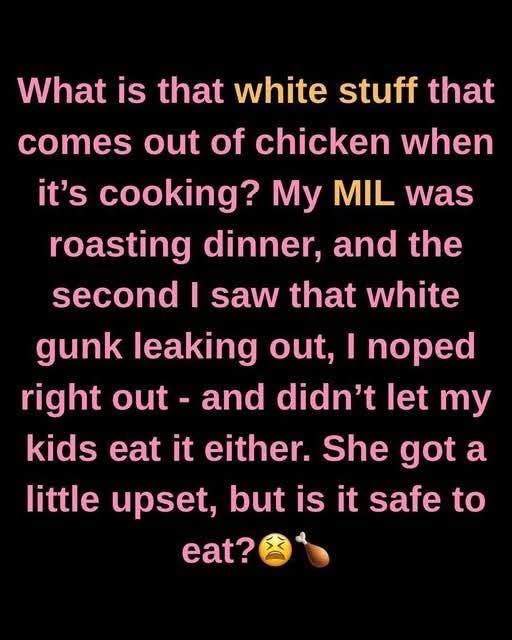
All right, I’ll admit: The first time I ever saw white gunk seep out of my chicken while it was roasting, I blanched.
I’m talking full-on, “Is tonight the night I’m going to make everyone sick at dinner?” levels of panic. Had I bought bad meat? Did bad meat not like me? Or worse—had I ruined dinner? (Because really, there are two tragedies: wasting food, and disappointing the people you love.
I remember that night vividly. I was making a beautiful roast chicken for my in-laws. The skin was golden. The aroma was intoxicating. Then I opened the oven to baste, and there it was—a pool of pale, foamy, white-ish liquid oozing from the chicken’s crevices. It looked like something had gone terribly wrong.
I almost threw the whole bird in the trash.
But my husband, who is far more practical than I am, grabbed my wrist. “It’s just protein,” he said. “Chicken does that. It’s fine.”
I didn’t believe him. So I googled it. Then I called my mother. Then I texted a chef friend.
Turns out, my husband was right.
That white stuff is completely normal, completely harmless, and actually a sign that your chicken is cooking properly.
Let me explain why—so you don’t have to panic like I did.
The Short Answer (What You Came For)
That white stuff is called “protein coagulation.” It’s mostly water and protein (specifically albumin) that gets pushed out of the chicken’s muscle fibers as it cooks.
Is it safe? Yes. Completely safe to eat.
Is it a sign of bad meat? No. In fact, it happens more often with fresh, high-quality chicken.
Should I wipe it off? You can, but you don’t have to. It won’t hurt you.
The Science (What’s Actually Happening)
Let me break it down.
Chicken (and all meat) is made up of muscle fibers containing water and proteins, including a protein called albumin. You’ve probably seen albumin before—it’s the clear, jelly-like substance in raw eggs (egg whites are almost pure albumin).
When you heat chicken, the muscle fibers contract. As they squeeze together, they force out the water and albumin that were trapped inside.
Heat also causes the albumin to coagulate (solidify) and turn from clear to white. That’s the “white gunk” you’re seeing.
The same thing happens when you cook eggs. Raw egg white is clear. Cooked egg white is white and opaque. Same protein. Same reaction.
The more you cook the chicken (or the higher the heat), the more the muscle fibers contract, and the more white stuff you’ll see.
Dark meat vs. white meat: You’ll typically see more white stuff on white meat (breasts) because it contains more water and less fat than dark meat.
Why Does It Sometimes Look Foamy or Chalky?
The appearance can vary depending on:
-
Cooking temperature: High heat forces out liquid faster, creating foamier, more noticeable coagulated protein.
-
Moisture content: Chicken that’s been brined or injected with a saline solution will release more liquid (and more white stuff).
-
Overcrowding the pan: If chicken pieces are too close together, steam builds up, and the white stuff pools instead of evaporating.
-
Type of chicken: Air-chilled chicken (not plumped with water) tends to release less white stuff than water-chilled chicken.
Is It Safe to Eat?
Yes. It’s just protein and water. It’s not harmful, not a sign of spoilage, and not an indication of disease.
Does it taste like anything? Not really. It’s mostly flavorless. Some people say it has a slightly bland, egg-white-like taste.
Should I wipe it off? You can, for appearance. But it’s not necessary for safety or flavor.
Will it affect texture? Not really. Your chicken will still be tender and juicy (assuming you didn’t overcook it).
When Is White Stuff NOT Normal? (Red Flags)
Let me be clear about when you should actually worry.
Toss the chicken if:
-
The white stuff is accompanied by a foul, sour, or ammonia-like smell.
-
The chicken is slimy or sticky to the touch (even after cooking? That’s not really a thing, but before cooking).
-
The white stuff is actually green, gray, or pink (could be mold or bacteria).
-
The chicken was already past its expiration date and smells off.
If the white stuff is just white and the chicken smells fine, you’re fine.
How to Minimize the White Gunk (If It Bothers You)
If the appearance bothers you, here are a few tricks.
1. Pat the chicken dry before cooking. Moisture on the surface contributes to the white stuff.
2. Cook at a lower temperature. High heat causes more rapid protein coagulation. Roast at 350°F instead of 425°F.
3. Don’t overcrowd the pan. Give each piece space so moisture can evaporate instead of pooling.
4. Sear the chicken first. Searing creates a crust that helps seal in moisture (though it won’t eliminate the white stuff entirely).
5. Wipe it off with a paper towel. If it’s already there, just dab it off before serving.
6. Cook chicken to the proper temperature (165°F). Overcooking forces out more liquid and more white stuff.
The “Clear Liquid” vs. “White Gunk” Difference
Sometimes you’ll see clear liquid instead of white gunk. That’s just the water content without enough albumin to make it opaque. Same thing, different appearance.
Clear liquid = mostly water, less albumin.
White gunk = more albumin, less water.
Both are normal.
What About the “White Stuff” on Raw Chicken? (Different Question)
Sometimes you’ll see white, stringy things on raw chicken. That’s not the same as the cooked white gunk.
What it is: Those are tendons or connective tissue. They’re safe to eat, but chewy. You can cut them off if they bother you.
A Brief Note on “Spaghetti Meat” (Woody Chicken)
Sometimes you’ll see white, stringy fibers inside cooked chicken breast. That’s a different phenomenon called “woody chicken” or “spaghetti meat.” It’s a texture issue caused by rapid growth in modern chicken farming.
Is it safe? Yes.
Is it appetizing? Not really. It’s chewy and fibrous.
Can you prevent it? No, it’s a quality issue with the raw chicken. Buy from different brands or choose air-chilled chicken.
Frequently Asked Questions
Why does my chicken have white foam in the pan?
That’s the same protein coagulation, mixed with air bubbles from boiling liquid. It’s normal.
Does white stuff mean the chicken is overcooked?
Not necessarily. It means the chicken has reached a temperature where proteins are coagulating. Overcooked chicken will be dry, but the presence of white stuff alone doesn’t indicate overcooking.
Can I eat the white stuff on chicken nuggets or breaded chicken?
Yes. It’s the same protein. It’s safe.
Why does my chicken sometimes have white stuff and sometimes not?
Variations in cooking temperature, moisture content, and chicken type affect how much white stuff appears.
Is white stuff more common in organic chicken?
Not necessarily. It’s more common in water-chilled chicken (which retains more moisture) than air-chilled chicken.
Should I drain the white stuff from the pan?
You can, but it’s not necessary. It will mix with pan juices and drippings, which are great for making gravy.
My chicken is still raw inside but white stuff is coming out. Is that bad?
No. The outside of the chicken heats faster than the inside. White stuff can appear before the chicken is fully cooked. Always use a meat thermometer to check doneness (165°F).
A Calm, Confident Conclusion
Here’s what I want you to take away from this article.
That white gunk isn’t a sign that you’ve ruined dinner. It’s not a sign that your chicken is diseased, contaminated, or spoiled. It’s just science. Protein + heat = coagulation.
My in-laws never knew I almost threw their dinner away. I wiped off the white stuff, arranged the chicken on a platter, and served it with a smile. No one said a word. Everyone loved it.
Now you know the truth. So the next time you see white stuff coming out of your chicken, don’t panic. Just smile, wipe it off (or don’t), and keep cooking.
Your dinner is fine. Your family is safe. And you are a perfectly good cook.
Now I’d love to hear from you. Have you ever panicked over white stuff on chicken? Did you throw it away? What’s your go-to chicken cooking method? Drop a comment below – I read every single one.
And if this guide saves you from tossing a perfectly good chicken, please share it with a friend who needs the same reassurance. A text, a link, a conversation. Good information is meant to spread. 🍗🧑🍳