
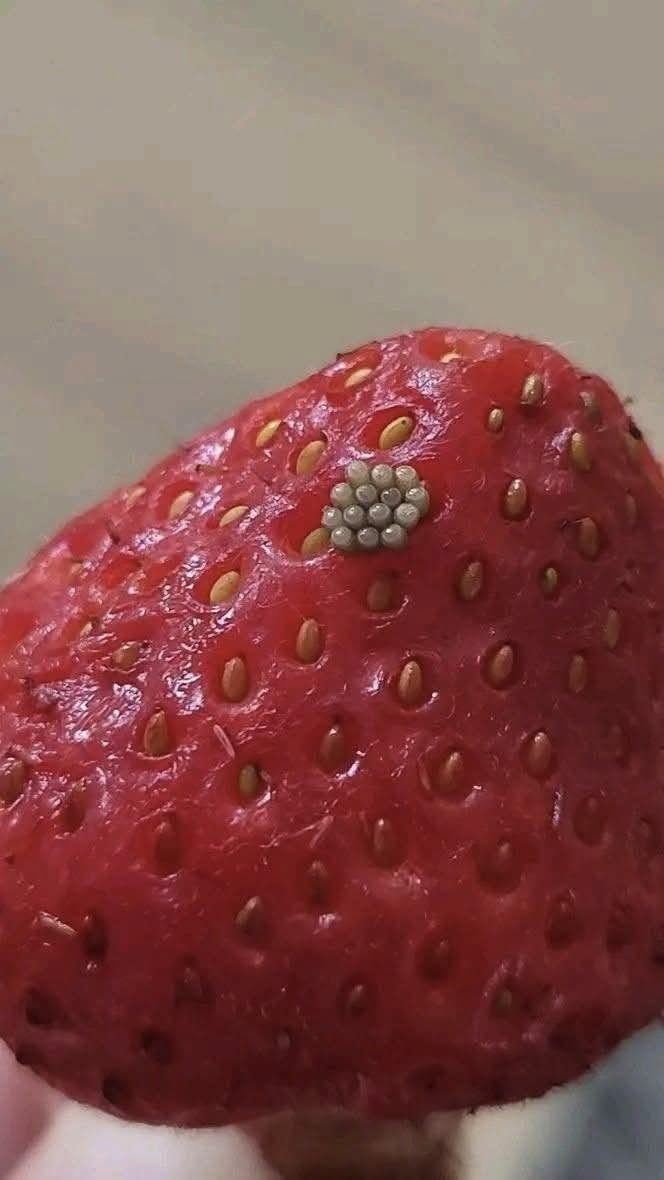
This is the most important question: If you accidentally eat a strawberry with a tiny fruit fly larva inside, will it hurt you?
No. It is completely harmless.
Here is the science-backed reassurance:
- They cannot survive your stomach: The human stomach is highly acidic. The moment a larva hits your stomach acid, it is killed and digested instantly. They cannot survive or hatch inside the human body.
- They don’t carry human diseases: Unlike ticks or mosquitoes, fruit flies do not transmit diseases to humans.
- It’s just extra protein: The FDA actually has official “Food Defect Levels.” They acknowledge that it is economically impossible to grow outdoor crops that are 100% free of natural, unavoidable insect parts. The allowable limit for insect infestation in berries is quite high because it poses no health risk.
The Verdict: It is definitely an “ick” factor, but it is not a health hazard.
🚫 When Should You Actually Throw Strawberries Away?
While a tiny fruit fly larva won’t hurt you, mold and bacteria will. You should throw your strawberries away if you notice:
- White or gray fuzzy mold on the skin or the green stem.
- A slimy texture or mushy, leaking juice.
- A sour, fermented, or foul odor.
If the berry is firm, bright red, and smells sweet, it is safe to eat—even if it hosted a tiny fruit fly at some point!
🛁 How to Properly Wash Your Berries
If you want to ensure your berries are as clean as possible before eating them, follow these steps:
1. The Basic Rinse (For everyday eating)
Place the berries in a colander and rinse them thoroughly under cold, running tap water for 30–60 seconds. The friction of the water is actually enough to wash away most surface dirt, pesticides, and any larvae hiding near the surface. Never soak berries in plain standing water, as it can push bacteria from the stem into the fruit.
2. The Baking Soda Soak (For pesticide removal)
If your main concern is pesticides rather than bugs, soak the berries in a bowl of cold water mixed with 1 teaspoon of baking soda for 5–10 minutes. Studies show baking soda is highly effective at breaking down surface pesticide residues. Rinse thoroughly afterward.
3. The Salt Water Soak (If you want zero bugs)
If the viral videos gave you anxiety and you want to guarantee no larvae are inside, fill a bowl with cool water and add 1 teaspoon of salt per cup of water. Soak the berries for 5 to 10 minutes (no longer, or they will taste salty and mushy). Rinse them very well under cold water afterward and pat them completely dry.
❤️ The Final Takeaway
Nature is messy, and growing food outdoors means sharing it with local wildlife—even the microscopic kind. The viral salt water videos are a great visual reminder to wash our produce, but they shouldn’t cause food anxiety.
So don’t let a tiny fruit fly larva rob you of the joy of peak-season strawberries. Just give them a good rinse under cold water, enjoy them with a dollop of whipped cream or in your morning oatmeal, and rest easy knowing your stomach is more than equipped to handle it. 🍓✨