

5. Who Is at High Risk of B12 Deficiency?
Vitamin B12 deficiency doesn’t affect everyone equally. Certain groups are more prone due to diet, age, medical conditions, or medications.
Vegetarians and Vegans
Because naturally occurring B12 is found primarily in animal products — meat, eggs, dairy, and fish — people following strict vegetarian or vegan diets are at higher risk unless they consume fortified foods or supplements. Healthline
Older Adults
As people age, gastrointestinal changes can reduce the ability to absorb B12 from food. Conditions like atrophic gastritis (thinning stomach lining) decrease the acid needed to separate B12 from protein in food. Healthline
People With Certain Medical Conditions
Conditions that affect the digestive tract — such as Crohn’s disease, celiac disease, and pernicious anemia — can impair absorption. In pernicious anemia, the body fails to produce intrinsic factor, a protein essential for B12 absorption. Cleveland Clinic
Medication Users
Long‑term use of proton pump inhibitors (PPIs), metformin (for diabetes), and other medications may interfere with B12 absorption, increasing deficiency risk. Healthline
People With Alcohol Use Disorder
Chronic alcohol consumption may impair nutritional absorption and contribute to deficiency. Cleveland Clinic
6. How Is B12 Deficiency Diagnosed?
Diagnosis usually begins with a blood test. Common tests include:
Serum B12 level — measures vitamin levels, though normal limits vary by lab.
Complete blood count (CBC) — checks for megaloblastic anemia.
Methylmalonic acid (MMA) and homocysteine — elevated levels can indicate functional B12 deficiency even if serum B12 appears normal.
Because symptoms may occur even with borderline levels, doctors may use multiple tests to confirm deficiency. Early detection is key to preventing permanent neurological damage. Healthline
7. Treatment Options for B12 Deficiency
The treatment depends on the cause and severity of deficiency.
Dietary Changes
For mild deficiency due to dietary lack, increasing B12‑rich foods — such as meat, fish, eggs, dairy, and fortified cereals — may help. Healthline
Supplements
Oral B12 supplements or high‑dose sublingual tablets are often effective, especially when absorption issues aren’t severe.
Injections
For people with absorption problems (e.g., pernicious anemia or certain gastrointestinal diseases), injections of vitamin B12 may be recommended to bypass the digestive tract. Cleveland Clinic
Most people begin to feel symptom improvement within weeks of starting treatment, but neurological recovery may take months or longer.
8. When to Seek Medical Help Without Delay
Some B12 deficiency symptoms are warning signs that should never be ignored:
Severe Neurological Symptoms
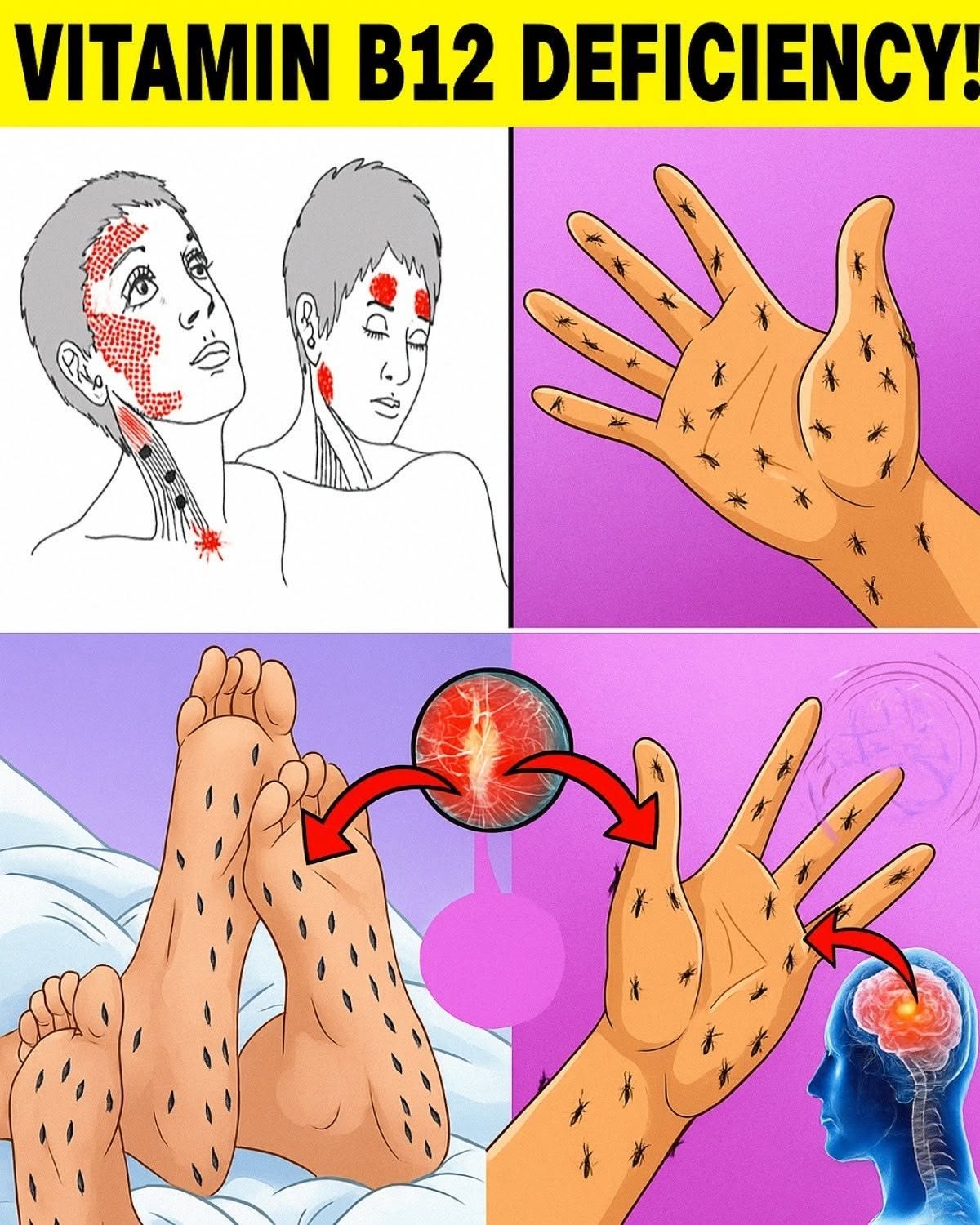
Persistent tingling or numbness in hands or feet
Difficulty walking or balancing
Significant memory loss, confusion, or cognitive decline
These may indicate nerve damage and require urgent evaluation. Harvard Health
Unexplained Anemia Symptoms
Severe fatigue
Shortness of breath at rest or with minimal exertion
Rapid heartbeat
These symptoms could reflect advanced anemia needing prompt medical care. Mayo Clinic
Mouth and Tongue Changes
Painful, inflamed tongue (glossitis), mouth ulcers, or severe glossitis symptoms should lead you to a clinician for evaluation. Healthline
Mood or Mental Health Changes
New or worsening depression, irritability, or cognitive disturbances should prompt a checkup to rule out nutrient deficiencies among other causes. Harvard Health
If you experience a combination of these symptoms — especially neurological ones — don’t wait to consult a healthcare provider.
9. Can Symptoms Be Reversed?
One of the most concerning aspects of B12 deficiency is that damage can become irreversible if left untreated for too long — particularly neurological changes. Early treatment often leads to full recovery of physical and blood‑related symptoms. Nerve damage may improve, but long‑term or severe neurological symptoms may persist even after treatment if the deficiency was prolonged. Harvard Health
10. Preventing B12 Deficiency
Prevention strategies depend on your risk factors:
Adequate Diet
Include B12‑rich foods like:
Meat and poultry
Fish and shellfish
Eggs
Dairy products
Fortified plant milks and cereals (especially important for vegans) Healthline
Supplementation
People at risk — especially vegans or older adults — may benefit from regular B12 supplementation after consulting a doctor.
Monitoring Medications and Conditions
If you take medications that affect absorption or have a condition like Crohn’s disease, ask your doctor about regular B12 testing.
11. Final Thoughts
Vitamin B12 deficiency is common, gradually progressive, and often overlooked because early symptoms can be subtle and mimic other conditions. Yet ignoring these signs — especially neurological, cognitive, or severe fatigue symptoms — can lead to irreversible nerve damage and serious health consequences. Cleveland Clinic