

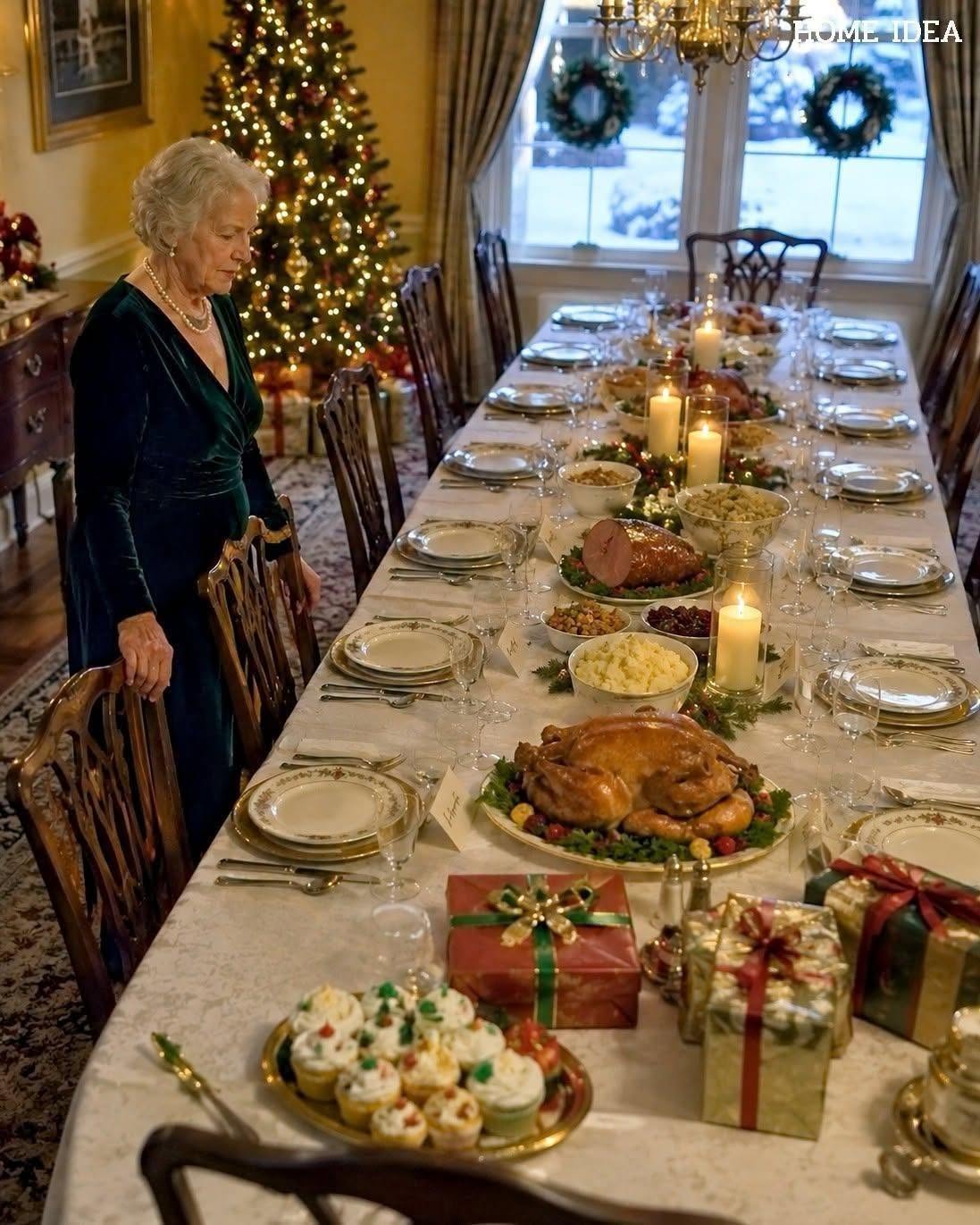
I told them I did not want gifts.
I did not want anything fancy.
I only wanted one evening together.
One proper family dinner.
One night that felt like the old days when Richard was alive and the grandchildren still ran through the hallway in socks.
Laura said, “We’ll see.”
Michael said, “I’ll try.”
Fiona smiled through the phone and said, “That sounds nice.”
I took those scraps and made a feast out of them.
That is what mothers do until the day they stop.
So I cooked for seventeen people.
I scrubbed the baseboards.
I polished the silver.
I wrapped presents.
I set name cards at every place.
I stood at the window every time headlights passed, foolishly believing the next car might finally turn into the driveway.
None did.
At midnight, I looked around at the untouched food, the place cards, the gifts, and the chairs waiting like accusations.
The dining room froze around me.
Candles leaned and flickered.
Silverware stayed perfectly straight beside plates nobody touched.
A spoon rested in the mashed potatoes exactly where I had placed it two hours earlier.
The house was still breathing, but nobody inside it was moving except me.
Nobody came.
And in that stillness, I understood the truth with a clarity that felt almost physical.
My children had not forgotten me.
They had simply decided I no longer mattered unless I was useful.
I stood up.
I blew out the candles.
Then I made the first honest decision I had made in years.
If my children wanted to live as though I were already gone, I would give them exactly that.
What they did not know was that the widow they ignored still controlled everything.
The house.
The acreage.
Richard’s investment accounts.
The lake property he bought before any of them were born.
Every dollar they had privately counted while pretending their questions were concern.
They had been asking for years.
Not directly, of course.
Greed rarely wears its real clothes when it visits family.
“Have you updated your will, Mom?”
“Who’s handling the lake house when you’re gone?”
“You should make things easier now so there won’t be confusion later.”
They never asked what I needed.
Only what would be left.
The morning after Christmas, I put the untouched leftovers into containers and drove them to a church kitchen that served hot meals.
I left the wrapped stockings in a box by the door.
I washed the dishes.
I stripped the table.
Then I took a photograph of the dining room before I put the chairs back.
Seventeen empty places.
Seventeen names.
Seventeen people who had taught me exactly where I stood.
In January, I hired a lawyer.
I chose him because he listened before he advised.
That mattered to me more than his office or his suit.
He sat across from me with a yellow legal pad and asked, “What do you want to happen?”
No one had asked me that in years.
I almost cried from the shock of it.
Then I told him.
I told him about Richard.
I told him about the missed holidays.
I told him about Michael’s porch, Emily’s graduation, Laura’s broken promise after my wrist fracture, and the four days I waited for biopsy results alone.
I did not exaggerate.
I did not have to.
The facts were ugly enough without decoration.
By the end of that meeting, he had written three lists.
Assets.
Beneficiaries.
Immediate protections.
In February, I signed documents my children could not undo.
We reviewed beneficiary forms, trust documents, deed records, account statements, and the old files Richard kept in the locked cabinet under the stairs.
We had the lake property transferred according to the plan.
We updated the house paperwork.
We redirected the accounts.
I kept copies of everything.
I also wrote letters.
Not angry letters.
That would have been too easy.
I wrote the truth.
I wrote about the Christmas table.
I wrote about the cake on Michael’s porch.
I wrote about the hospital intake form with emergency contacts who had become decorative.
I wrote about how it felt to realize I could die in that house and my children might learn about it from paperwork.
Then I sealed the letters and gave them to my lawyer.
He asked if I was sure.
I said yes.
In March, I vanished.
That is the word my children used later, as if I had been taken.
I was not taken.
I left.
I packed only what belonged to me.
Richard’s photograph.
My jewelry.
My medical records.
A suitcase of clothes.
A box of recipe cards.
The green velvet dress, folded carefully under tissue paper.
I moved into a small apartment in a quiet town they did not know to search.