
Most People Ignore These Early Symptoms
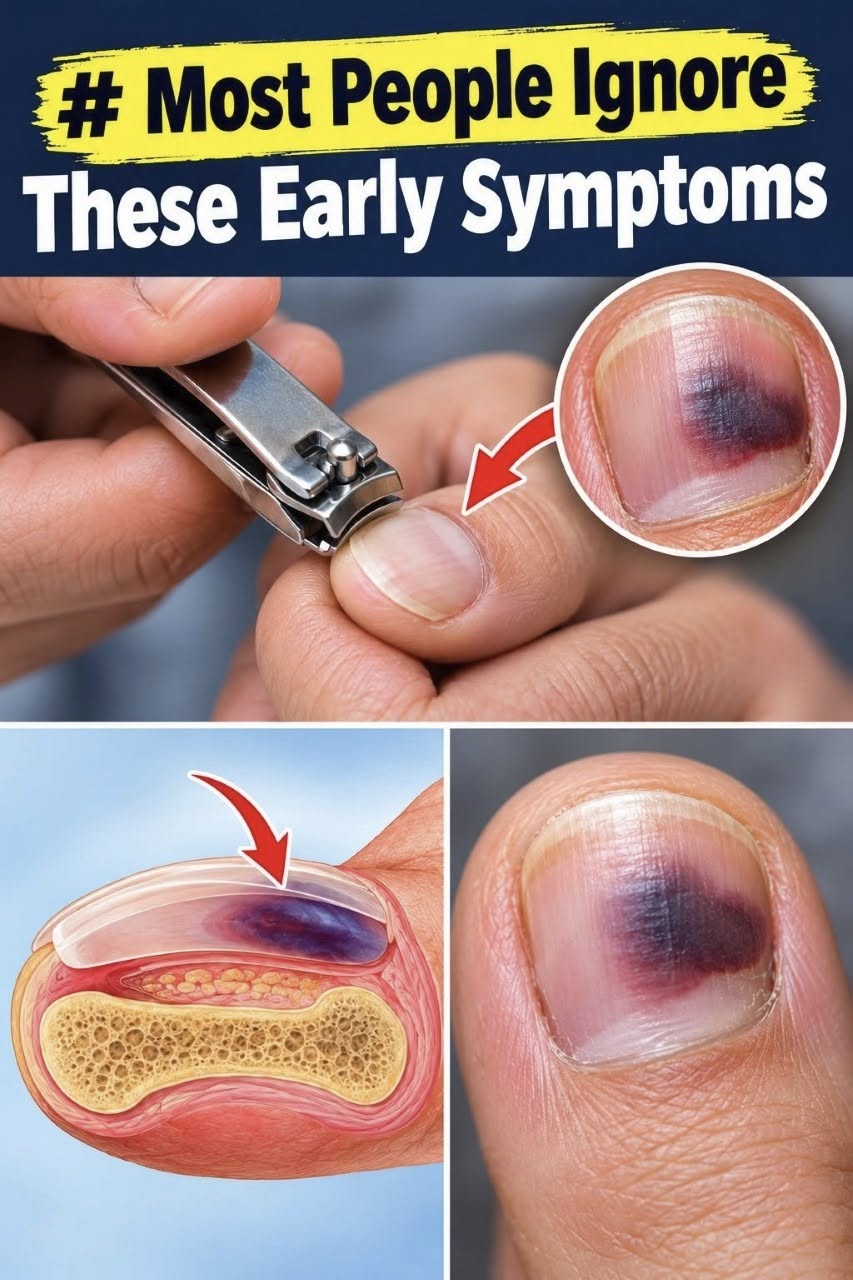
A small change in a fingernail or toenail can be easy to dismiss. After cutting a nail, however, some people notice tenderness, swelling, pressure, or a dark red, purple, or black area beneath the nail. In some cases, this can happen because the nail or the delicate tissue underneath it has been accidentally traumatized.
One possible result is called a subungual hematoma — a collection of blood beneath the nail. It can occur after direct pressure or a minor injury to the nail, and the affected area may become painful and discolored. Injury
How Can Cutting a Nail Cause a Problem?
Cutting the nail itself normally should not cause swelling underneath it. The problem can occur if the nail is accidentally injured while being trimmed — for example, by applying excessive pressure, cutting extremely close to the skin, or catching the tissue underneath the nail.
The nail sits directly over the nail bed,
a sensitive layer of tissue containing small blood vessels. Trauma to this area can cause some of those vessels to bleed, allowing blood to collect beneath the nail. Because there is very little space between the nail plate and nail bed, even a relatively small amount of blood can create pressure and tenderness.
What Does It Look Like?
The first sign may simply be discomfort when touching the nail.
Over time, you may notice:
A red, purple, blue, brown, or black area underneath the nail
Tenderness when the nail is touched
A feeling of pressure or throbbing
Swelling around the injured area
In more significant injuries, partial separation of the nail from the nail bed
The discoloration can look alarming, but a traumatic bruise beneath the nail is often a minor injury and usually improves as the nail grows.
Why Does the Nail Become Dark?
The dark color usually comesfrom blood trapped beneath the nail plate.
Unlike a bruise on the skin, where the blood can spread into surrounding tissue, blood underneath a nail has limited room to move. It therefore remains concentrated beneath the nail and can appear dark purple, blue, or almost black.
As the nail grows, the discolored portion gradually moves toward the tip. Fingernails can take several months to completely grow out, while toenails may take even longer.
Is Swelling Always a Sign of Something Serious?
No.
A small amount of swelling or tenderness after a minor nail injury does not necessarily mean that there is a serious problem. Many small nail injuries heal without specific treatment.
However, increasing pain, significant swelling, pus, spreading redness, fever, or an obvious wound should not be ignored because these can indicate a more significant injury or infection.
What Should You Do?
For a minor injury, protecting the finger
or toe and avoiding further pressure on the nail can help.
A cold pack wrapped in a cloth can be used briefly to help with pain and swelling. Keeping the area clean is also important.
Most importantly, do not try to puncture, drill, or otherwise make a hole in the nail yourself to release trapped blood. If the pressure is severe, a healthcare professional can determine whether drainage is appropriate and perform it safely when necessary.
When Should You See a Doctor?
Medical evaluation is particularly important when:
The pain is severe or continues getting worse.
The nail becomes extensively dark or swollen.
There is a deep cut around the nail.
The nail is significantly lifted or damaged.
You cannot move the finger or toe normally.
You suspect a fracture.
Pus develops around the nail.
Redness or swelling continues to increase.
You develop a fever.
A healthcare professional can examinethe nail and determine whether there is only a bruise or whether another injury needs treatment. In some cases, an X-ray may be necessary to check for an underlying fracture.
Continue reading by clicking the ( NEXT 》 ) button below!
What Happens to the Nail Afterwards?
If the injury is minor, the nail will usually continue growing normally. The dark area doesn’t necessarily disappear immediately; instead, it gradually moves toward the end of the nail as new nail grows from the base.
This can make the discoloration visible for weeks or months even after the original pain has disappeared.
In a more significant injury, the nail can partially or completely separate from the nail bed. A new nail can eventually grow, although the process can take considerable time.
Prevention: Be Careful When Trimming Your Nails
A few simple habits can reduce the chance of accidental nail trauma:
Avoid cutting nails excessively short.