

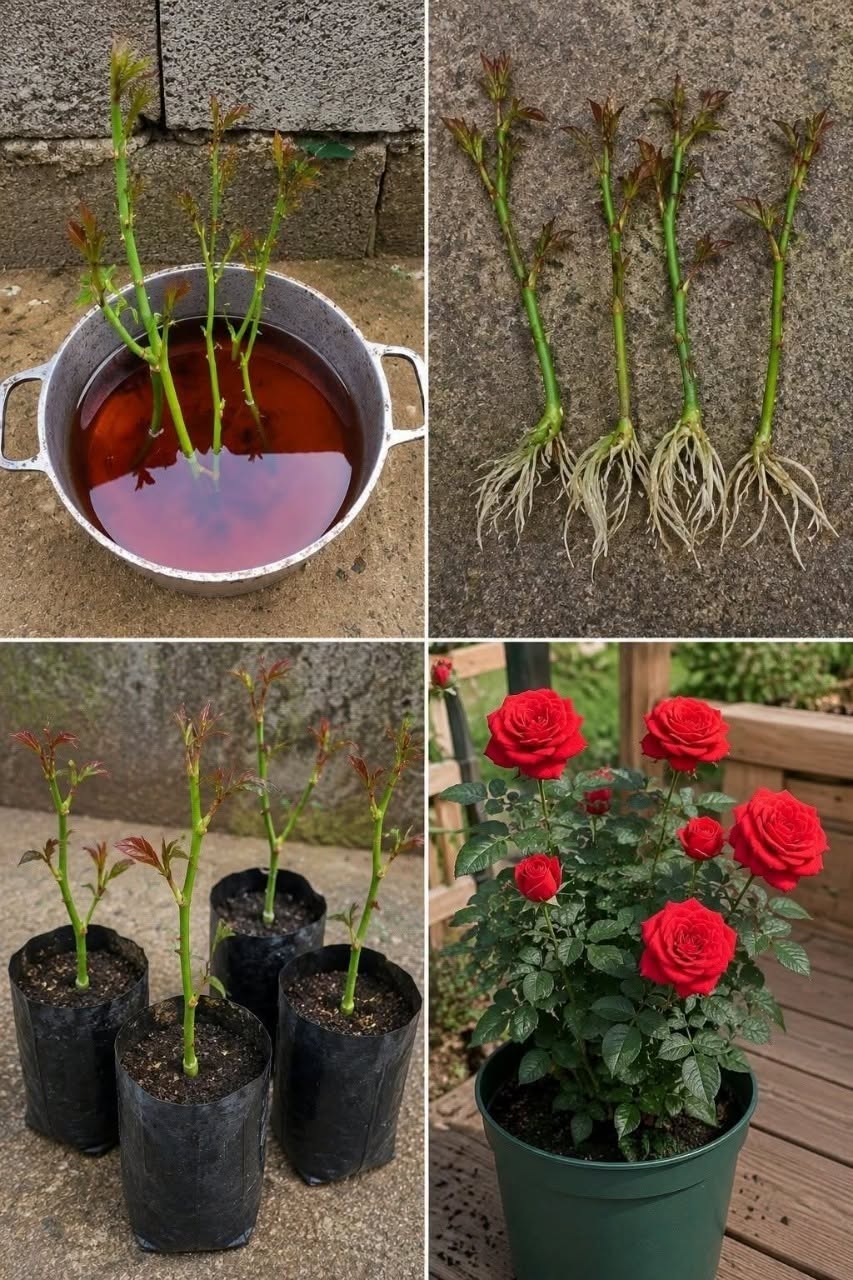
Preparing and Planting the Rose Cuttings
Choose Healthy Cuttings
Select a 6–8 inch cutting from a mature, healthy rose plant. Make the cut just below a leaf node. Remove the bottom leaves and any flowers or buds, leaving only two or three leaves at the top.
Soak in the Solution
Dip the bottom third of each rose cutting into the prepared solution. Let it soak for at least 30 minutes. This allows the plant to absorb the natural hormones and nutrients.
Plant the Cutting
Insert the soaked cutting into a pot filled with moist, well-draining soil. You can also plant directly into the garden if conditions are mild. Make sure at least one or two nodes are buried beneath the surface.
Create a Humid Environment
Cover the cutting with a clear plastic bottle (cut in half) or place a plastic bag loosely over the pot. This helps maintain humidity, a key factor in root development.
Water Gently
Keep the soil lightly moist, but not soggy. Mist the leaves occasionally to maintain humidity.
Caring for the Cuttings After Planting
Keep the cuttings in a warm, bright spot out of direct sunlight. Within two to three weeks, you should begin to see signs of new growth—a positive indication that roots are forming. You can gently test by giving the cutting a soft tug; resistance means roots are anchoring.
After about 4–6 weeks, once the cutting has rooted well, gradually remove the plastic cover to acclimate the young plant to open air. At this stage, you can transplant it to a bigger pot or into the ground for further growth.
Benefits of the 1-Cup Natural Trick
All-natural ingredients: No need for synthetic rooting hormones.
Cost-effective: Uses household scraps and items.
Supports plant immunity: Garlic helps fend off pathogens.
Accelerates root growth: Aloe vera and banana offer nutrients and hormones.
Eco-friendly: Reduces waste and chemical use in the garden.
Final Thoughts
Rooting rose cuttings doesn’t have to involve complex steps or commercial chemicals. With this one-cup natural solution, you can grow new rose bushes from cuttings in a way that’s both sustainable and effective. Whether you’re propagating a cherished heirloom rose or expanding your garden, this method is a simple and rewarding way to multiply your plants using ingredients you likely already have at home.