
The terminology varies by region, grocery store, recipe writer, and even family tradition.
In many American recipes, you’ll see green onion used frequently. In other places, scallion is the preferred name.
So if a recipe calls for scallions and your grocery store has green onions, don’t panic!!
They’re usually the ingredient you need.
What Are Spring Onions?
Spring onions are young onions that have been harvested while they’re still relatively small, but they generally have a more developed bulb than green onions or scallions.
That bulb is the easiest visual clue.
A spring onion may look like a green onion that has started forming a small round onion at the bottom.
The flavor can also be more pronounced. The white bulb tends to have more onion bite, while the green tops remain fresher and milder.
Spring onions can be eaten raw or cooked.
Try them in:
- Salads
- Salsas
- Grain bowls
- Roasted vegetables
- Stir-fries
- Frittatas
- Soups
- Pasta dishes
- Savory tarts
And yes, the green tops are edible too!!
Are Spring Onions the Same as Green Onions?
Not necessarily.
This is where regional naming gets tricky.
Some people use spring onion as another name for a young green onion. In other contexts, spring onions specifically refer to young onions with a small, developing bulb.
That means the name alone isn’t always enough.
Look at the bulb. If there’s a clearly rounded, more developed bulb, you’re more likely looking at what many people call a spring onion.
What Are Chives?
Chives are the little green guys that often get mistaken for miniature green onions.
But they’re actually a different plant altogether.
Chives are an herb belonging to the allium family, the same broader plant family that includes onions and garlic.
They have:
- Very thin green stems
- Hollow, grass-like leaves
- A delicate onion flavor
- No substantial white stalk
- No large edible bulb
Their flavor is considerably more subtle than that of a raw green onion.
That’s why chives are often used as a finishing herb.
Snip them over baked potatoes, scrambled eggs, soups, creamy sauces, salads, dips, or roasted vegetables, and suddenly the whole dish tastes fresher.
Anything but boring!!
Green Onions vs. Scallions vs. Spring Onions vs. Chives at a Glance
Here’s the quick-reference version.
| Ingredient | Appearance | Flavor | Bulb | Best Uses |
|---|---|---|---|---|
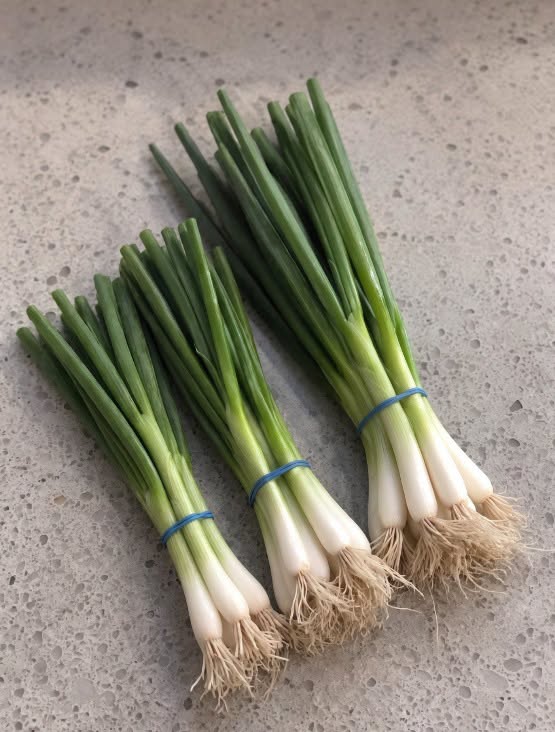
| Green onions | White base with long green tops | Mild onion | Little or none | Stir-fries, salads, soups, garnishes |
| Scallions | Similar to green onions | Mild onion | Little or none | Same as green onions |
| Spring onions | Green tops with a more developed bulb | Stronger onion | Small, rounded bulb | Roasting, salads, cooking |
| Chives | Thin, hollow green stems | Delicate onion | No substantial bulb | Garnishing, eggs, dips, potatoes |
The simplest way to remember it?
Green onions = scallions in many recipes.
Spring onions = usually more bulbous and onion-forward.
Chives = thin, delicate herb.
What Do They Taste Like?
This is where the differences become really useful in the kitchen.
Green Onions and Scallions
They have a fresh, mild onion flavor.
The white portion is usually stronger and sharper, while the green portion is milder and slightly grassy.
Raw green onions add a crisp bite, but cooking mellows them considerably.
Spring Onions
Spring onions generally have a stronger onion character because the bulb has had more time to develop.
Depending on the variety and maturity, the flavor can range from mild and sweet to noticeably sharp.
They’re fantastic when cooked because the heat can bring out their natural sweetness.
Chives
Chives are the most delicate of the group.
Their flavor is lightly oniony, fresh, and grassy rather than intensely pungent.
They’re perfect when you want a hint of onion without making onion the star of the dish.
Can You Substitute One for Another?
Sometimes—absolutely!
But the result won’t always be exactly the same.
Green Onions and Scallions
These are usually interchangeable in recipes.
If your recipe says scallions and you have green onions, you’re generally good to go.
Spring Onions for Green Onions
Spring onions can often replace green onions, especially in cooked recipes.
Because spring onions can have a stronger flavor and larger bulb, you may want to adjust the amount slightly.
Chives for Green Onions
Chives can work as a garnish or flavor booster, but they aren’t a perfect one-to-one substitute.
They’re much more delicate and don’t provide the same crisp texture or substantial white portion.
If you’re making a dish where green onions are an important structural ingredient, chives won’t quite do the same job.
Green Onions for Chives
You can use finely sliced green onion as a substitute for chives when needed.
Just remember that green onions have a stronger flavor and crunchier texture.
For delicate dishes, start with less and add more if necessary.
Which Parts Should You Eat?
Good news: there’s very little waste!
Green Onions and Scallions
Both the white and green portions are edible.
The white section has a stronger onion flavor and works beautifully when sautéed or cooked.
The green tops are mild and are especially good sliced over finished dishes.
Spring Onions
The bulb and green tops can both be eaten.
The bulb can be sliced, sautéed, roasted, grilled, or eaten raw.
The green portion can be treated much like scallion greens.
Chives
The tender green stems are what you typically use.
Simply snip them with kitchen scissors or chop them with a knife.
If your chive plant produces flowers, the blossoms can also be edible and are lovely scattered over salads or savory dishes.
How to Choose the Best Ones at the Store
Freshness matters!
For Green Onions and Scallions
Look for:
- Bright green tops
- Firm white bases
- Crisp leaves
- No slimy areas
- No strong unpleasant odor
Avoid bunches that look wilted, yellow, or excessively damaged.
For Spring Onions
Look for firm bulbs and fresh, upright green tops.
The bulb should feel firm rather than soft or mushy.
For Chives
Choose bright green, perky stems.
Avoid chives that are limp, yellowing, or visibly dried out.
How to Store Them
These ingredients are delicate, so proper storage can make a big difference.
Green Onions and Scallions
Trim away any damaged portions and store them in the refrigerator.
One handy method is to wrap them loosely in a slightly damp paper towel and place them in a bag or container.
Another option is storing the roots in a small amount of water and covering the tops loosely, although you’ll want to change the water regularly.
Spring Onions
Keep them refrigerated and use them relatively soon after purchasing for the best texture and flavor.
Chives
Chives are best refrigerated and protected from drying out.
A damp paper towel and a loosely closed container or bag can help keep them fresh.
Can You Freeze Green Onions, Scallions, Spring Onions and Chives?
Yes, but freezing changes the texture.
That’s not usually a problem if you’re planning to cook them afterward.
Frozen green onions, spring onions, or chives can be useful in:
- Soups
- Sauces
- Stir-fries
- Casseroles
- Egg dishes
For fresh garnishes, however, freshly chopped ingredients are much better.
The crisp texture just doesn’t survive freezing quite the same way.
How to Use Green Onions and Scallions
Green onions are one of those ingredients I absolutely love keeping around because they can rescue a meal at the last minute.
Slice them thinly and add them to:
- Fried rice
- Ramen
- Tacos
- Quesadillas
- Scrambled eggs
- Potato salad
- Coleslaw
- Dips
- Soups
- Noodle bowls
- Grain bowls
You can also grill or char whole green onions for a smoky side dish.
And the smell when they’re sizzling in a hot pan is incredible!!
How to Use Spring Onions
Because of their more substantial bulb, spring onions can handle cooking beautifully.
Try:
- Roasting them
- Grilling them
- Sautéing them
- Adding them to frittatas
- Chopping them into salads
- Mixing them into sauces
- Serving them alongside grilled meats
The bulbs can become beautifully sweet and tender when cooked.
How to Use Chives
Chives really shine when added toward the end of cooking.
They’re wonderful with:
- Baked potatoes
- Cream cheese
- Sour cream
- Eggs
- Butter
- Creamy soups
- Fish
- Chicken
- Salads
- Dips
- Fresh cheeses
Because their flavor is delicate, you don’t need much.
A small handful can make a dish look restaurant-worthy with almost zero effort!!
Which One Should You Use?
Here’s my simple rule of thumb.
Want crunch and a mild onion flavor? Choose green onions or scallions.
Want a stronger onion flavor and a small bulb? Choose spring onions.
Want a delicate onion flavor and a pretty finishing touch? Choose chives.
And if a recipe says scallions while your store only has green onions?
Buy the green onions. In most cases, that’s exactly what the recipe means.
Common Mistakes to Avoid
Assuming All Four Are the Same
They aren’t.
Although they belong to the same general onion family, their appearance, texture, flavor, and culinary uses differ.
Replacing Chives in Equal Amounts
Chives are much more delicate than green onions.
A direct one-for-one substitution can change the flavor and texture of your dish.
Throwing Away the Green Tops
Don’t do it!
The green portions of green onions and spring onions are delicious and useful.
Using Only the White Part
Unless your recipe specifically says otherwise, use the green tops too.
They make excellent garnishes and add a fresh flavor at the end of cooking.
Frequently Asked Questions
Are green onions and scallions the same thing?
In many recipes and regions, yes. The terms are often used interchangeably for young onions with slender white bases and long green tops.
Are spring onions and scallions the same?
Not always. Spring onions are commonly distinguished by having a more developed, rounded bulb, while scallions typically have little or no bulb. However, naming varies by region.
Are chives baby green onions?
No. Chives are a separate herb. They have thin, hollow leaves and a much more delicate onion flavor.
Can I use chives instead of scallions?
You can, especially as a garnish, but they won’t provide the same texture or intensity. Use them when you mainly want a light onion flavor.
Can I eat the green part of spring onions?
Yes! The green tops are edible and can be used much like scallion greens.
Which has the strongest flavor?
Generally, spring onions with a well-developed bulb will have a stronger onion flavor than chives, while green onions and scallions fall somewhere in between depending on freshness and maturity.
Why do recipes call them scallions instead of green onions?
It’s largely a matter of regional terminology and culinary tradition. Many recipes use the names interchangeably.
Are all of these members of the onion family?
They belong to the broader allium group, but they are not the same plant. Green onions/scallions and spring onions are young onions, while chives are a distinct herb.
General Information
Green onions/scallions: Mild young onions with edible white and green portions.
Spring onions: Young onions with a more developed bulb and generally stronger onion flavor.
Chives: A delicate herb with thin, hollow green leaves and a mild onion taste.
Best everyday substitute: Green onions and scallions are usually interchangeable.
Best garnish: Chives or thinly sliced scallion greens.
Best for cooking: Green onions and spring onions.
Best for delicate flavor: Chives.
Conclusion
So there you have it—the mystery of green onions, scallions, spring onions, and chives is finally a little less mysterious!!
The key thing to remember is that green onions and scallions are often two names for the same ingredient, while spring onions generally have a more noticeable bulb. Chives are the real outsider: they’re a separate herb with much thinner stems and a softer onion flavor.
Once you know what you’re looking at, you’ll be able to pick the right ingredient with confidence.
And honestly, all four deserve a regular spot in the kitchen. They’re inexpensive, versatile, colorful, and capable of adding that little fresh something that makes an ordinary dish taste finished.
Sometimes it’s the tiniest handful of chopped green herbs that makes all the difference!!
More Helpful Ingredient Guides to Try
If you enjoyed this guide, here are a few other ingredient comparisons worth exploring:
- Green onions vs. leeks
- Shallots vs. onions
- White onions vs. yellow onions
- Cilantro vs. parsley
- Fresh garlic vs. garlic powder
- Red onions vs. sweet onions
- Parsley vs. chervil
- Basil vs. oregano
Did This Guide Help?
I’d love to hear from you!
Leave a review or comment and tell me which one you use most often—green onions, scallions, spring onions, or chives.
And if you make a recipe using any of them, share a photo on Pinterest so other home cooks can discover the idea too. Seeing your creations is one of my favorite parts of sharing food!!
Nutritional Information
Because these ingredients are typically used in relatively small amounts, their nutritional contribution depends heavily on the quantity eaten and the overall recipe.
As a general guide, a small serving of raw green onion or scallion provides only a modest number of calories while contributing vitamin C, vitamin K, and other micronutrients. Chives and spring onions also provide vitamins, minerals, and plant compounds.
For an exact nutritional value, calculate the nutrition based on the specific ingredient, quantity, and recipe being prepared.