

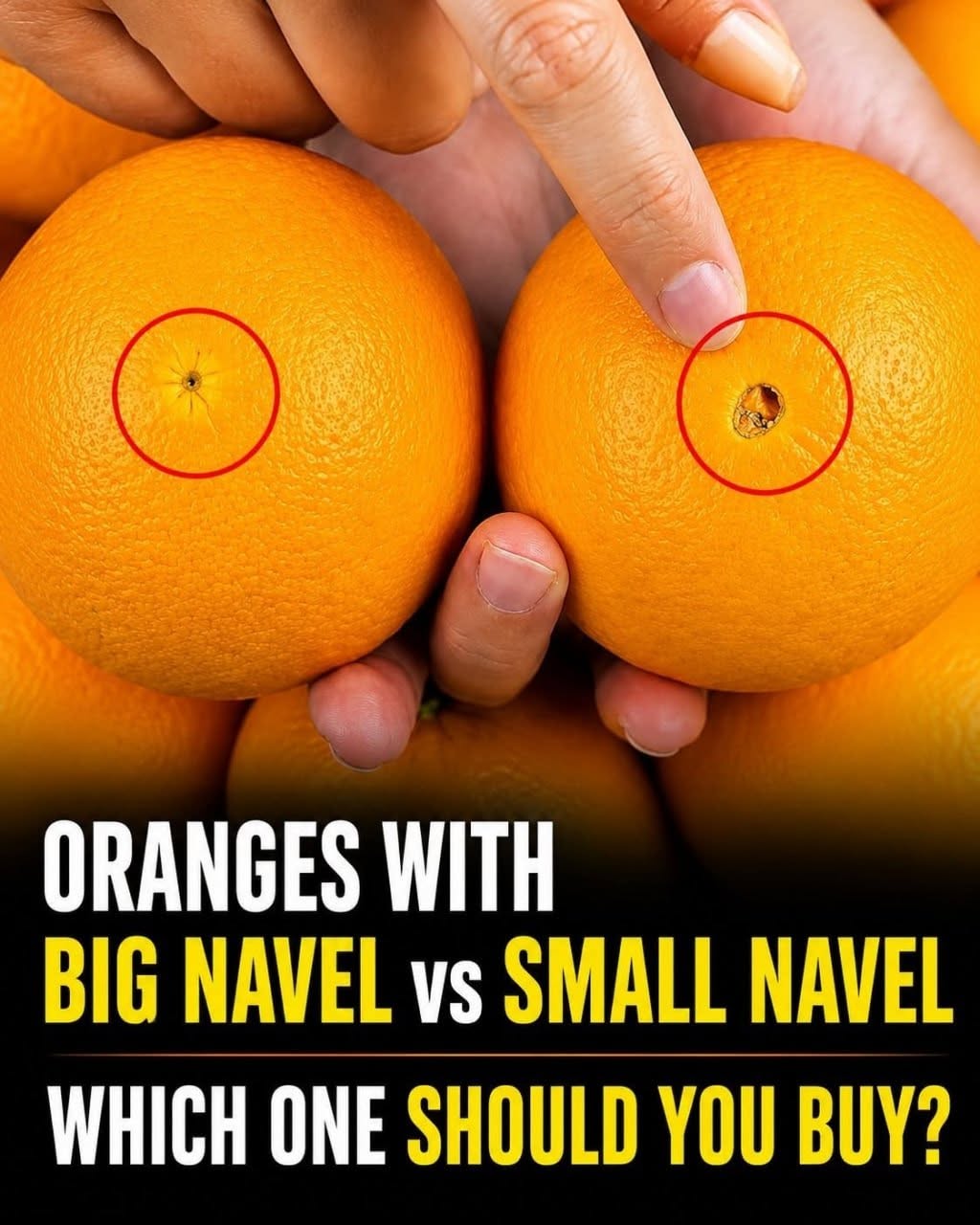
Big Navel or Small Navel? How to Pick the Sweetest, Juiciest Oranges
Want oranges that are sweet, juicy, and full of flavor? Before putting one in your shopping bag, take a quick look at the bottom. That small “navel” may offer a useful clue.
Choosing a good orange can sometimes feel like a guessing game. Two fruits can look almost identical on the outside, yet one may be wonderfully juicy while the other is dry and disappointing.
Fortunately, there are several simple things you can check before buying. One of the most talked-about is the small circular mark found at the blossom end of a navel orange.
What Does the Navel Tell You?
Turn the orange upside down and look at the end opposite the stem.
Many shoppers and fruit sellers associate a larger, more open navel with an orange that may be sweeter and juicier. Oranges with very small
or tightly closed navels are sometimes considered less juicy or slightly more acidic.
However, the navel isn’t a guarantee of taste. Orange variety, growing conditions, harvest time, and storage can all affect the final flavor.
So consider the navel a helpful clue—not a foolproof test.
5 Other Ways to Choose a Great Orange
-
- Look for Vibrant Color
A good orange should generally have a healthy, vibrant appearance.
- Look for Vibrant Color
Avoid fruit with extensive dull areas, excessive green patches, or skin that looks unusually dry or damaged. Small natural imperfections aren’t necessarily a problem.
- Choose Firm, Well-Shaped Fruit
Give the orange a gentle feel.
It should be firm without being rock-hard. Avoid fruit with obvious soft spots, deep wrinkles, bruises, or damaged areas.
A nicely rounded orange is also often a good choice.
- Compare the Weight
This is one of the easiest tricks to use at the grocery store.
If you’re comparing oranges
of roughly the same size, pick up several and see which feels heavier.
A heavier fruit often contains more water and juice, while an unusually lightweight orange may have lost moisture during storage.
- Inspect the Skin
Take a close look at the peel.
Slight texture or small cosmetic imperfections are normal. What you want to avoid are signs of spoilage such as mold, significant bruising, cuts, or severely shriveled skin.
-
- Consider the Season
Freshly harvested fruit can have better flavor and aroma than fruit that has been stored for a long time.
- Consider the Season
When possible, buying oranges during their appropriate growing season can improve your chances of finding flavorful fruit.
How Should You Store Oranges?
If you’re planning to eat your oranges within a few days, a cool, dry place can work well.
For longer storage, the refrigerator can help maintain freshness and slow moisture loss. Keeping fruit away from damaged
or spoiled oranges is also important because deterioration can spread.
Don’t Rely on One Trick
The biggest mistake is assuming that one feature can tell you everything about an orange.
A large navel doesn’t automatically mean an orange will be exceptionally sweet. Instead, combine several clues:
Check the navel.
Look for a healthy, vibrant color.
Choose oranges that feel heavy for their size.
Look for firm fruit without major soft spots.
Avoid moldy, bruised, or heavily shriveled oranges.
Buy fresh fruit from a reputable seller when possible.
The Bottom Line
The next time you’re choosing oranges, don’t simply grab the first ones you see.
Turn one over and check the navel, then consider its weight, firmness, color, skin condition, and freshness. Together, these simple checks can make it easier to bring home oranges that are juicy and enjoyable.
And remember: the navel is only a clue. The variety and growingconditions ultimately play a major role in how sweet and flavorful an orange will be.