

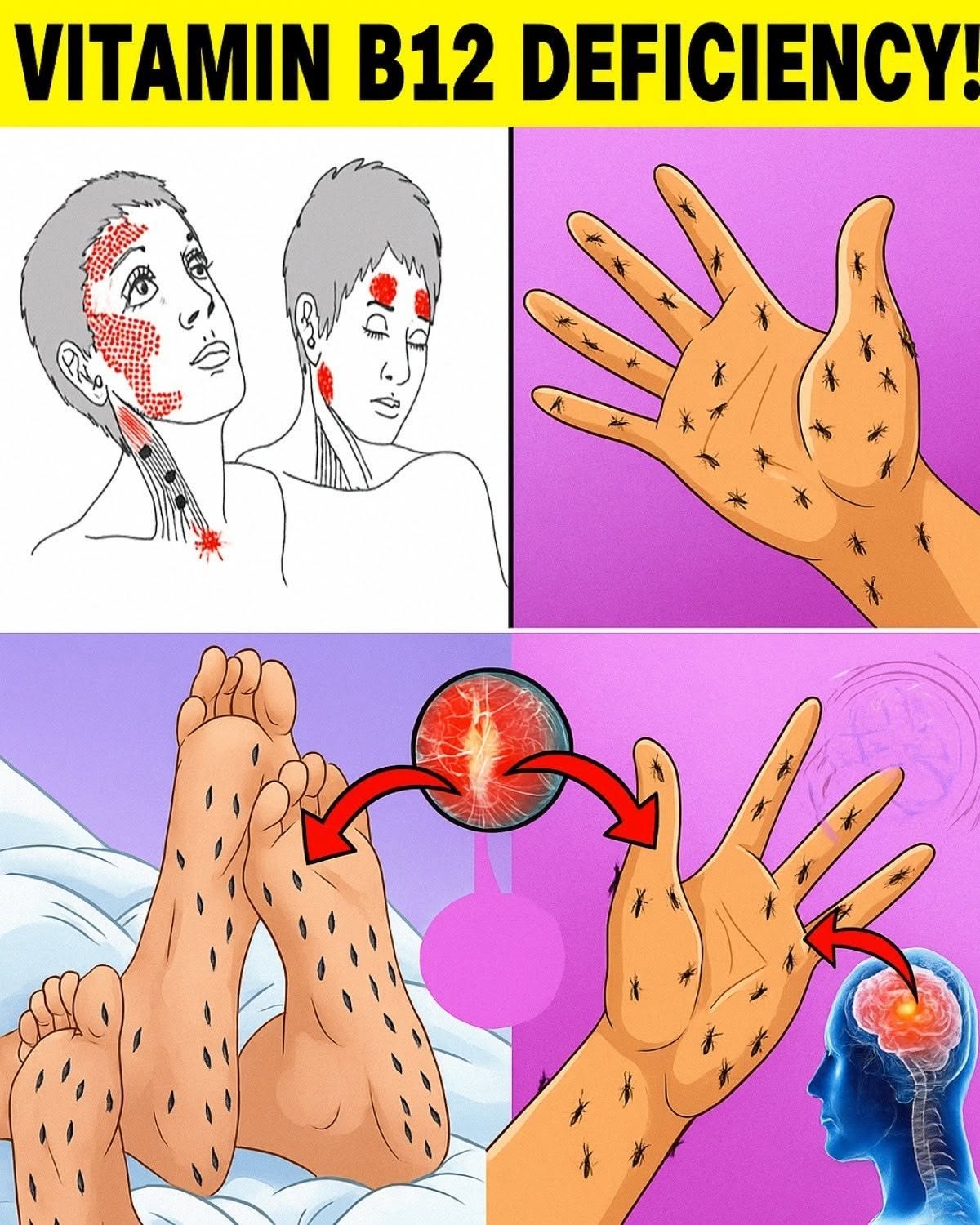
Vitamin B12 — also called cobalamin — is one of the most important nutrients your body needs to survive. It plays essential roles in red blood cell formation, DNA synthesis, nerve health, and brain function. Because it’s stored in the liver and recycled efficiently, a deficiency can take years to develop, but when it does, the effects can be wide‑ranging, serious, and sometimes permanent if ignored. Cleveland Clinic
Yet many people don’t know they’re deficient until symptoms become unmistakable — and by then, important tissues like nerves or the brain may already be damaged. Many symptoms also overlap with other conditions, which is why this deficiency is often missed or misdiagnosed. Understanding the signs is crucial, especially because treatment is generally simple once the underlying cause is identified. Healthline
In this long‑form blog post, we’ll explore:
What vitamin B12 does in the body
Common and serious symptoms of deficiency
Why these symptoms happen
Who’s most at risk
How deficiency is diagnosed
Treatment options
When to see a doctor without delay
How to prevent deficiency
1. Why Vitamin B12 Matters
Vitamin B12 is an essential water‑soluble vitamin with several key functions:
a. Red Blood Cell Formation
B12 is critical for making healthy red blood cells. Without it, your body produces large, abnormal red blood cells that can’t carry oxygen efficiently, leading to a type of anemia known as megaloblastic anemia. Healthline
b. Nervous System Health
Vitamin B12 plays a major role in building and maintaining myelin, the protective covering around nerves. Without enough B12, this sheath deteriorates, leading to neurological symptoms such as numbness and coordination problems. Harvard Health
c. DNA and Cell Formation
B12 helps with DNA synthesis. When it’s low, cell division is impaired, especially in rapidly dividing tissues such as the bone marrow. Cleveland Clinic
d. Brain and Mental Health
B12 is involved in neurotransmitter production and brain chemistry. Low levels have been linked to mood disorders, memory issues, and cognitive decline. Harvard Health
Because it’s involved in such fundamental processes, deficiency can bridge across physical, neurological, and mental health spectrums — and the symptoms can range from subtle nagging issues to life‑altering problems.
2. Common Early Symptoms of B12 Deficiency
Symptoms usually develop gradually over months or years. They may start subtly and progress if left untreated. Healthline Some early signs include:
Fatigue and Weakness
Feeling unusually tired or weak is one of the most common initial symptoms of B12 deficiency. This happens because your body isn’t producing enough healthy red blood cells to deliver oxygen efficiently to tissues. Healthline
Pale or Jaundiced Skin
A B12 deficiency can cause paleness due to anemia. It can also lead to a yellowish tinge (jaundice) because immature red blood cells break down quickly, increasing bilirubin levels. Healthline
Shortness of Breath and Heart Palpitations
When less oxygen is delivered throughout your body, even mild physical activity can feel exhausting. Your heart may beat faster or irregularly as it tries to compensate. Mayo Clinic
Headaches
Headaches can be a subtle sign of B12 deficiency, especially when accompanied by other symptoms like fatigue or mood changes. Healthline
Digestive Disturbances
Some individuals may experience loss of appetite, nausea, diarrhea, constipation, or bloating. These are less specific but may occur in conjunction with other signs. Healthline
3. Neurological Symptoms That Should Never Be Ignored
One of the most dangerous consequences of untreated B12 deficiency is nerve damage. Neurological symptoms can be slow to develop but may become permanent if the deficiency persists. Harvard Health
Numbness and Tingling
Also known as paresthesia, this sensation often starts in the hands and feet. It can feel like burning, pins and needles, or general numbness. This is caused by nerve damage resulting from insufficient B12 for myelin production. Healthline
Balance and Coordination Problems
Damage to the spinal cord and peripheral nerves may cause unsteady gait, difficulty walking, or a sensation like the ground feels unstable beneath your feet. These issues may increase fall risk. Harvard Health
Muscle Weakness
Weakness or muscle cramps may occur because the nervous system isn’t transmitting signals effectively. Healthline
Vision Changes
B12 deficiency can affect the optic nerve, leading to blurred or disturbed vision. Healthline
Cognitive and Mental Changes
Memory loss, confusion, trouble concentrating, and “brain fog” may appear — sometimes mimicking conditions like early‑onset dementia. Mood disorders, including depression and irritability, are also common. Healthline+1
Glossitis and Mouth Symptoms
An inflamed, red, or sore tongue (glossitis) and mouth ulcers may develop, often alongside anemia. These can be painful and noticeable early on. Healthline
4. Why These Symptoms Happen
The symptoms above arise due to two major mechanisms:
a. Impaired Red Blood Cell Production
Without enough B12, red blood cells can’t mature properly. They become large, fragile, and ineffective at transporting oxygen. The resulting megaloblastic anemia leads to fatigue, shortness of breath, pale skin, and light‑headedness. Healthline
b. Nervous System Damage
Vitamin B12 is vital for maintaining the myelin sheath around nerves. Without sufficient B12, myelin breaks down, leading to nerve dysfunction — identified by tingling, numbness, weakness, and coordination problems. Harvard Health
Over time, chronic deficiency can cause irreversible neurological damage if not treated promptly.
SEE THE NEXT PAGE