

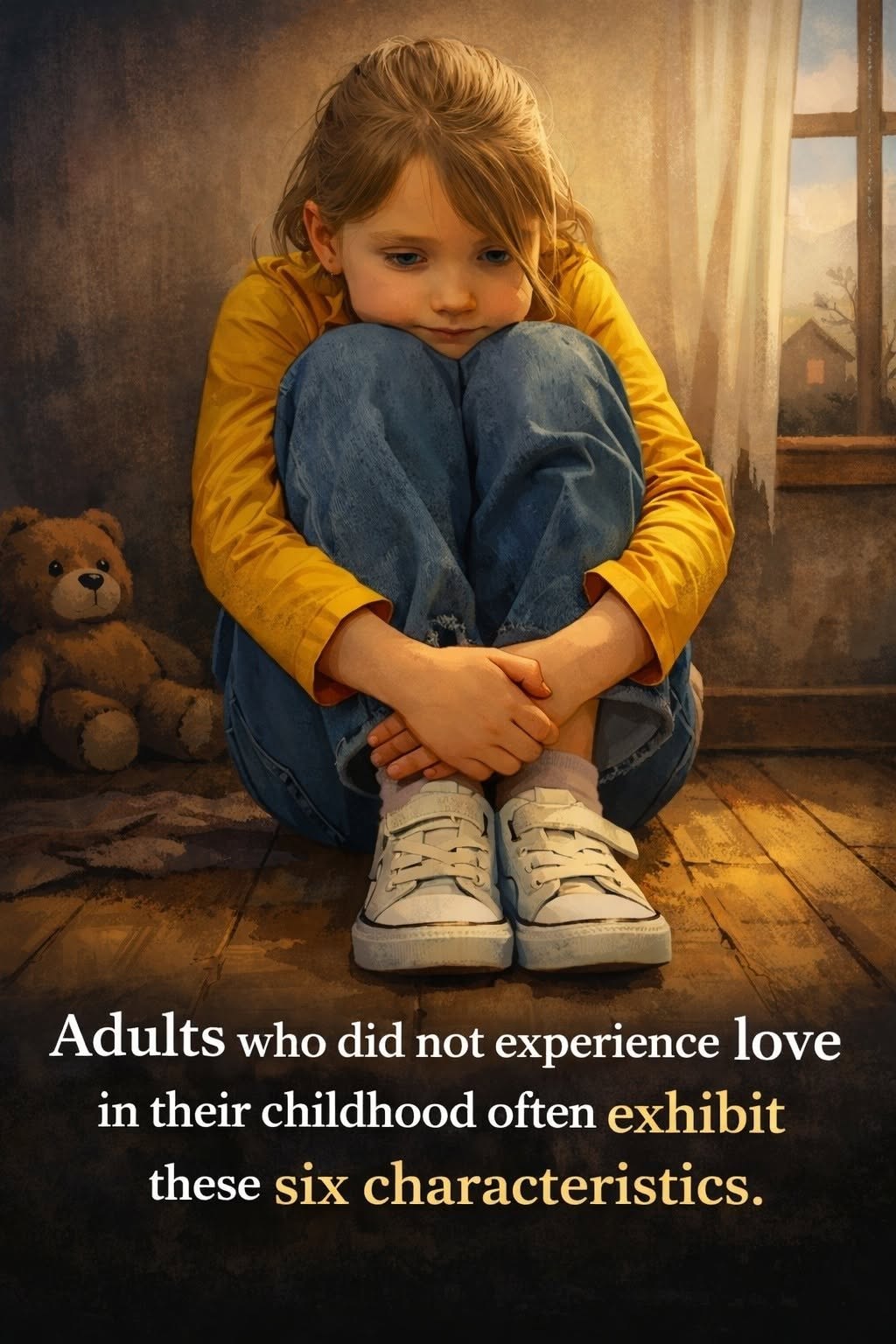
Sometimes, the way we react today is shaped by what we didn’t receive in the past. A lack of affection during childhood doesn’t just disappear—it quietly influences thoughts, emotions, and relationships in adulthood.
Here are some key signs that reveal how emotional neglect can leave a lasting impact:
-
- Struggles with Self-Worth and Relationships
Growing up without affection is like building a house on unstable ground. Without consistent love and validation, self-esteem often develops in a fragile way.
- Struggles with Self-Worth and Relationships
As adults, these individuals may constantly doubt themselves, question their value, and feel undeserving of success or happiness. This can lead to missed opportunities and self-sabotaging behaviors.
In relationships, opening up becomes difficult. Trust feels risky—especially when the people who were supposed to provide safety once failed to do so.
- Love Feels Confusing or Threatening
For someone unfamiliar with affection, love can feel strange—even unsafe.
Instead of comfort, kindness may trigger suspicion. They
might question others’ intentions or fear being hurt, rejected, or abandoned.
This often creates an internal conflict:
A deep desire for closeness
Paired with a strong fear of intimacy
As a result, they may either cling too tightly or push people away.
- Difficulty Expressing Needs and Emotions
Many people who lacked affection as children learned to suppress their feelings as a way to cope.
They may struggle to:
Express their emotions
Communicate their needs
Set healthy boundaries
Instead, they tend to please others, avoid conflict, and minimize their own desires—sometimes to the point of losing touch with what they truly feel.
- A Constant Need for Validation
Affection isn’t just about physical care—it’s about attention, encouragement, and emotional presence.
Without it, adults often grow up searching for the validation they missed. They may seek approval through:
Work achievements
External praise
Relationships
But no matter how much they achieve, the feeling of “
not enough” can persist—like trying to fill a bottomless void.
- Fear of Abandonment and Rejection
Even in stable relationships, there may be an underlying fear that things will fall apart.
This fear can lead to:
Overthinking small situations
Becoming overly attached
Or emotionally distancing themselves to avoid getting hurt
It’s a protective mechanism—but one that often creates more pain.
-
- Emotional Healing Feels Difficult—but Possible
The most important truth is this: these patterns are not permanent.
Awareness is the first step toward healing. With time and effort, it’s possible to rebuild self-worth and develop healthier emotional connections.
Helpful paths to healing include:
Therapy or psychological support
Reading and self-education
Honest, safe relationships
Practicing self-compassion
Healing is not quick or easy—it’s more like learning to swim again after a bad experience. It takes patience, courage, and kindness toward yourself.
A Difficult Childhood Doesn’t Define Your Future
Your past may shape you, but
it doesn’t have to limit you.
Adulthood offers a powerful opportunity: to break old patterns, to grow, and to create a healthier, more peaceful way of loving—both for yourself and for those around you.