
Printed shirts are more challenging because bleach may damage both the background fabric and the printed design.
Fabric markers can sometimes repair plain areas around the print, but recoloring an entire printed garment may alter the design.
In these cases, decorative patches, embroidery, fabric paint, or intentional tie-dye effects may produce a better-looking result than trying to make the damage invisible.
Turning the Damage Into a Design
Sometimes the easiest solution is not hiding the bleach stain but incorporating it into a new style.
Creative options include:
- Embroidery over the damaged area
- Iron-on patches
- Fabric paint
- Intentional tie-dye patterns
- Decorative stitching
- Adding multiple coordinated designs so the original spot looks intentional
This approach can be especially useful for casual sweatshirts, jeans, children’s clothing, and inexpensive garments.
When the Fabric Itself Has Been Damaged
Strong bleach does more than remove color. Prolonged exposure can weaken fibers.
If the affected area feels thin, brittle, rough, or fragile, recoloring may improve the appearance but will not restore the original strength of the fabric.
Eventually, weakened fibers may tear or develop holes.
How to Prevent Future Bleach Accidents
Prevention is much easier than repairing damaged dye.
- Wear old clothing when cleaning with bleach.
- Keep colored laundry away from open bleach containers.
- Pour bleach carefully and never directly over clothing.
- Wash your hands after handling bleach before touching fabrics.
- Check countertops and floors for unnoticed splashes.
- Store bleach securely with the cap tightly closed.
- Use oxygen-based laundry products when chlorine bleach is unnecessary.
Be Careful With Bathroom Cleaners
Many mysterious bleach marks do not come from the laundry room at all.
Bathroom mold removers, disinfecting sprays, toilet cleaners, and certain kitchen cleaners may contain sodium hypochlorite.
A tiny splash can land on clothing without becoming visible immediately. The discoloration may appear later after the chemical has had time to react.
Checking product labels for words such as “bleach,” “chlorine,” or “sodium hypochlorite” can help prevent accidental clothing damage.
Which Method Should You Choose?
If the bleach exposure is still fresh, rinse immediately and remove or neutralize the residual chlorine.
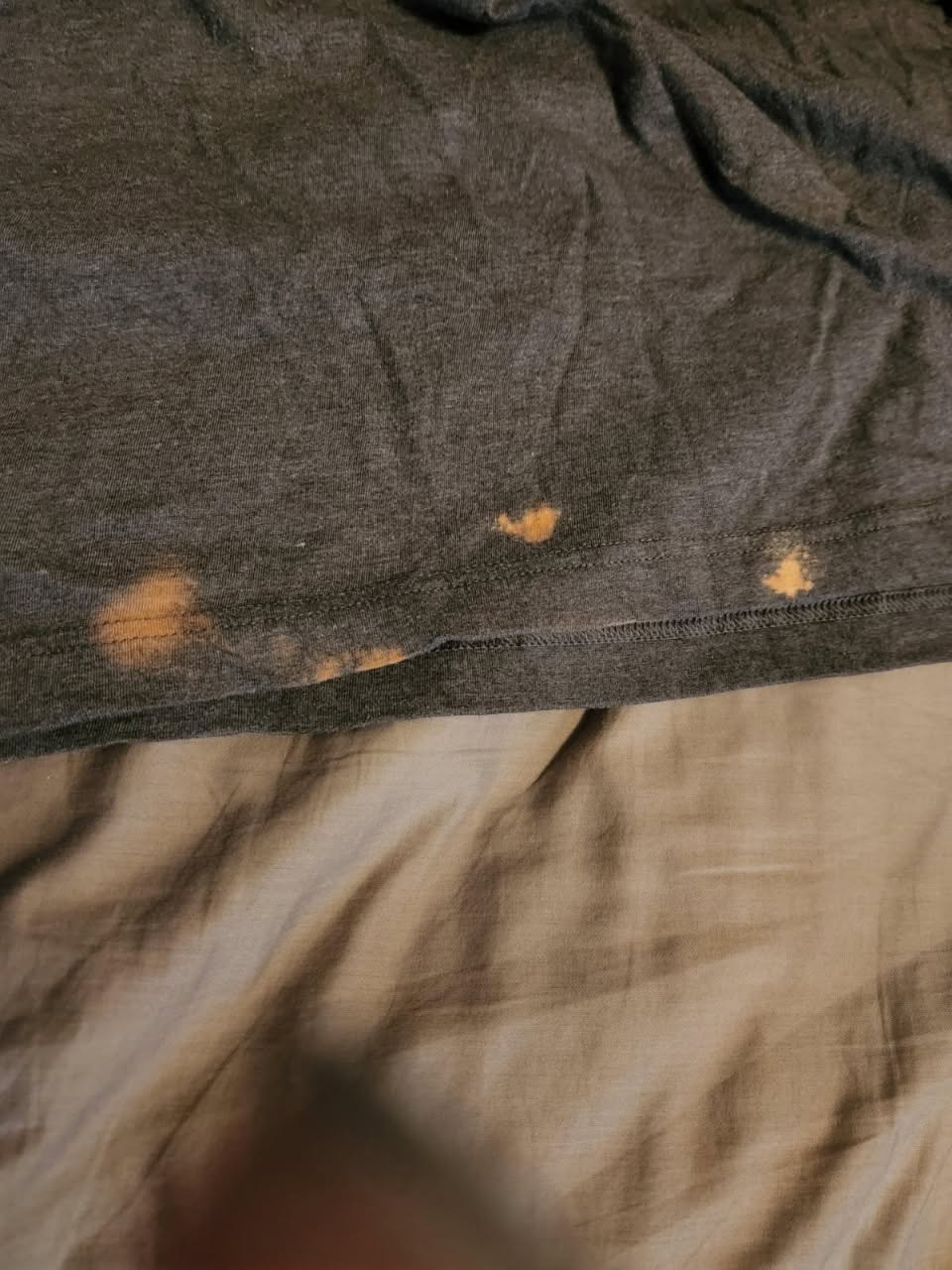
If the area has already changed color, think of it as dye damage rather than a conventional stain.
For a few tiny spots, a color-matched fabric marker is often the easiest solution.
For large or numerous marks on a dye-compatible garment, recoloring the entire piece may provide better results.
For prints, delicate fabrics, or unusual colors, creative repair may be safer than chemical treatment.
Can the Clothing Ever Look Exactly Like New?
Sometimes repairs are extremely convincing, especially on dark solid fabrics. In other cases, a faint difference remains visible under bright lighting.
The result depends on the original dye, fiber type, size of the damaged area, texture of the fabric, and quality of the color match.
Before-and-after images online may make the process look instantaneous, but careful color matching and gradual application usually produce much better results than rushing.
The Bottom Line
A bleach stain is fundamentally different from coffee, grease, or food stains because chlorine bleach may chemically remove the fabric’s color. Once that dye is gone, ordinary washing cannot restore it.
The two most useful strategies are therefore straightforward: neutralize and rinse fresh bleach immediately to limit further damage, or recolor the affected fabric once permanent discoloration has occurred.
Small marks can often be disguised effectively with fabric markers, while larger damaged areas may be better suited to full-garment dyeing or creative repair. Always consider the fiber content, test products in a hidden area first, and never mix bleach with vinegar, ammonia, or other household cleaners.
With the right method, many garments that initially look ruined can still be made wearable again—and sometimes the repair is difficult to notice at all.