

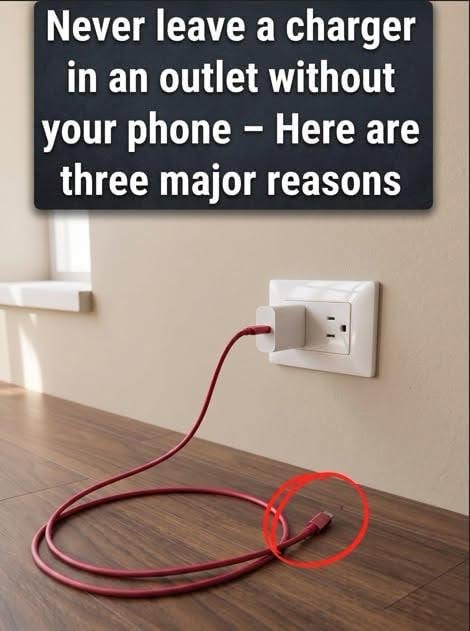
You unplug your phone in a hurry, toss it into your pocket, and leave the charger sitting in the wall. It seems harmless—after all, your phone isn’t even connected anymore.
But here’s the thing: a charger that’s plugged into an outlet can still use electricity, generate a small amount of heat, and remain exposed to electrical problems even when it isn’t charging your phone.
That doesn’t mean every plugged-in charger is an immediate fire hazard. Modern, reputable chargers are designed with safety protections and typically use very little power when they’re sitting idle.
Still, unplugging a charger when you don’t need it is a simple habit that can reduce unnecessary energy use and eliminate one more piece of electrical equipment from your home when it isn’t being used.
And honestly? It takes about two seconds.
So, let’s talk about what really happens when you leave a charger plugged in without your phone—and when you should be especially careful.
Why You Should Unplug Your Charger
A charger may look completely inactive when nothing is connected to it, but internally, its electronic components can remain energized as long as it’s plugged into the wall.
That means it isn’t truly “off.”
It Can Still Draw Electricity
When a charger remains plugged in, it may consume a tiny amount of electricity even when it isn’t charging a device. This is sometimes called standby power or phantom power.
For one phone charger, the amount is usually very small. You probably won’t see a dramatic change in your electricity bill from one charger alone.
But think about how many small electronics are plugged in around your home.
Chargers. TVs. Computers. Speakers. Kitchen appliances. Game consoles.
Those little amounts can add up.
Unplugging chargers that aren’t needed is an easy way to avoid wasting energy unnecessarily.
The Charger Can Still Produce Heat
Electrical components can produce some heat while energized.
A quality charger should be able to handle normal standby operation safely, but heat becomes more concerning when a charger is damaged, poorly made, covered by fabric, placed in a poorly ventilated area, or exposed to other electrical problems.
That’s why you shouldn’t tuck a plugged-in charger under a pillow, blanket, rug, or pile of clothing.
Even when it isn’t charging anything, give the charger room to breathe.
Not All Chargers Are Created Equal
Not All Chargers Are Created Equal
This is one of the biggest points worth remembering.
A modern charger from a reputable manufacturer is very different from a damaged, counterfeit, or poorly constructed charger.
Quality chargers typically include protective features designed to help manage things such as excessive current, overheating, and abnormal electrical conditions.
Cheap or counterfeit products may not provide the same level of protection.
And that’s where the real concern begins.
Watch Out for Damaged Chargers
Take a quick look at your chargers every now and then.
If you notice:
- Frayed or exposed wires
- Cracks in the plastic
- Burn marks
- Discoloration
- A loose connection
- A bent plug
- Buzzing or unusual sounds
- A burning or chemical smell
- Excessive heat
Stop using the charger.
Seriously—don’t wait for it to get worse.
A damaged charger or cable is not something to “use just one more time.”
Replace it with a suitable, safety-certified product.
Can a Plugged-In Charger Cause a Fire?
A charger being plugged in without a phone does not automatically mean it will start a fire.
That’s an important distinction.
However, electrical fires can involve defective equipment, damaged cords, faulty outlets, overheating, poor-quality components, or improper electrical connections.
A charger that is already damaged or malfunctioning is not worth leaving energized when you’re away from it.
This is especially important overnight or when you’re leaving the house for an extended period.
If you don’t need it plugged in, why leave it connected?
What About Overloaded Outlets?
Another common misconception is that one little phone charger will somehow overload an entire household circuit.
That’s generally not the concern.
A typical phone charger uses relatively little power compared with appliances such as heaters, ovens, kettles, hair dryers, or air conditioners.
The bigger issue is overloading an outlet or power strip with multiple high-power devices, especially when extension cords or power strips are used improperly.
For example, plugging several high-wattage appliances into the same overloaded power strip is much more concerning than having a single phone charger connected.
So don’t panic over one charger.
Instead, pay attention to the bigger electrical picture.
Does Leaving a Charger Plugged In Damage the Charger?
Not necessarily.
A quality charger doesn’t automatically wear out simply because it’s plugged into the wall.
However, electronic components experience electrical and thermal stress over time, and the overall lifespan of a charger depends on its design, quality, temperature, and how it’s used.
Repeated exposure to excessive heat can be particularly hard on electronics.
So if your charger becomes noticeably hot even when it isn’t doing anything, that’s a good reason to investigate rather than simply ignoring it.
Your Outlet Matters, Too
Sometimes the problem isn’t the charger at all.
It’s the outlet.
An outlet that feels loose, makes crackling or buzzing sounds, shows discoloration, smells burnt, or becomes unusually warm should not be ignored.
If a plug doesn’t fit securely into the outlet, don’t keep using it as though everything is fine.
Electrical problems inside a wall can be much more serious than a forgotten phone charger.
If you’re concerned about an outlet, have it inspected by a qualified electrician.
The Simple Habit That Makes Sense
Here’s the easiest rule:
If you aren’t using the charger, unplug it.
That’s it.
You don’t need to run around your house unplugging every electronic device immediately. And you don’t need to be afraid every time you see a charger in an outlet.
Just make unplugging unused chargers part of your normal routine.
When you remove your phone from the charger, pull the charger from the wall if you don’t need it for another device.
It takes seconds.
And that small habit can reduce standby electricity use and remove unnecessary electrical equipment from the outlet.
When You Should Be Extra Careful
There are a few situations where leaving a charger plugged in deserves more attention.
When the Charger Gets Very Hot
A little warmth can occur during normal operation, but a charger that becomes unusually or excessively hot deserves investigation.
Unplug it and allow it to cool.
If the problem continues, replace it.
When the Charger Is Damaged
Cracked casing, exposed wiring, burn marks, or a damaged plug are all reasons to stop using it.
Don’t tape over a severely damaged cable and assume you’ve fixed the underlying problem.
When the Charger Is Cheap or Counterfeit
Price isn’t the only measure of quality, but chargers from unknown sources with questionable markings or construction deserve caution.
Choose chargers that are appropriate for your device and meet recognized safety requirements for your region.
When the Charger Is Covered
Never bury a charger beneath bedding, clothing, cushions, or other materials that can trap heat.
Keep it exposed and properly ventilated.
When You’re Leaving Home
If you’re heading out for several days, unplugging unnecessary chargers is an easy precaution.
There’s no reason for unused equipment to remain energized while nobody is home.
How to Make Your Charging Setup Safer
You don’t need a complicated system.
A few simple habits go a long way.
Use the Right Charger
Use the charger supplied with your device or a reputable replacement designed to meet the device’s requirements.
Avoid suspiciously cheap products that don’t provide clear information about the manufacturer or safety certification.
Inspect Your Cables
Cables can take a beating.
They get bent, pulled, twisted, stuffed into bags, and stepped on.
Check them occasionally for damage and replace them when necessary.
Keep Chargers Dry
Electricity and water are a terrible combination.
Keep chargers and charging devices away from sinks, bathtubs, wet countertops, and other sources of moisture.
Don’t Cover Them
Give chargers adequate airflow.
Don’t charge devices under pillows or blankets, and don’t cover the charging adapter with clothing.
Don’t Ignore Warning Signs
If something smells burnt, sparks, buzzes, becomes unusually hot, or changes color, stop using it.
Your charger isn’t worth risking your safety.
What About Overnight Charging?
Modern phones and chargers have built-in controls that manage charging, and phones generally don’t continue charging at maximum power indefinitely once the battery reaches its target.
Still, overnight charging has another consideration: heat.
Keep the phone and charger on a hard, open surface rather than underneath bedding.
If a charger or cable is damaged, don’t use it overnight simply because it seems to work during the day.
A Quick Charger Safety Checklist
Before you leave a charger plugged in, ask yourself:
- Is the charger in good condition?
- Is the cable free from exposed or damaged wiring?
- Does the charger become unusually hot?
- Is the outlet secure?
- Is the charger from a reputable source?
- Is it sitting somewhere with good ventilation?
- Is it away from water?
- Is there any unusual buzzing, smell, discoloration, or sparking?
If everything looks normal, a modern quality charger is generally designed to operate safely.
But if something seems wrong, unplug it and don’t ignore the warning sign.
Frequently Asked Questions
Frequently Asked Questions
Is it dangerous to leave a phone charger plugged in without a phone?
Usually, a modern, undamaged charger from a reputable manufacturer is designed to remain connected safely. However, it can still consume a small amount of standby electricity, and damaged or defective chargers can present electrical hazards.
Does a charger use electricity when nothing is connected?
Yes. A plugged-in charger can draw a small amount of standby power even when it isn’t actively charging a device. The amount varies depending on the charger’s design and efficiency.
Can an unused charger overheat?
A quality charger should not normally become dangerously hot simply because it is plugged in without a phone. Excessive heat, however, can indicate a faulty charger, poor ventilation, damage, or another problem that should be investigated.
Should I unplug my charger when I leave the house?
Unplugging unnecessary chargers is a simple precaution, particularly if you’re going to be away for an extended period. It also eliminates their standby power consumption while they’re disconnected.
Can a charger cause an electrical fire?
A faulty, damaged, counterfeit, or poorly constructed charger can contribute to electrical hazards. A properly functioning, reputable charger is designed with safety protections, but no electrical device should be ignored when it shows signs of damage or malfunction.
Should I unplug chargers at night?
Should I unplug chargers at night?
You can unplug chargers when they’re not needed. If you leave one connected, make sure it’s in good condition, properly ventilated, and away from bedding or other materials that could trap heat.
How do I know if my charger is unsafe?
Look for frayed wires, cracks, discoloration, burning smells, buzzing, sparks, loose connections, or unusual heat. Any of these signs is a good reason to stop using the charger.
Final Thoughts
So, should you panic if you discover a charger sitting in the wall without your phone?
No.
But should you make a habit of unplugging chargers you don’t need?
Absolutely.
A modern, reputable charger is generally designed with safety protections, and the standby electricity used by one charger is usually tiny. The bigger concern is damaged, defective, counterfeit, or poorly used charging equipment.
That’s why the smartest approach isn’t fear—it’s good habits.
Use quality chargers. Keep them ventilated. Replace damaged cables. Don’t overload outlets. Keep charging equipment away from water and flammable materials.
And when you’re finished with a charger and don’t need it anymore, simply pull it from the wall.
It’s one tiny habit, but sometimes the simplest safety habits are the ones worth keeping.