

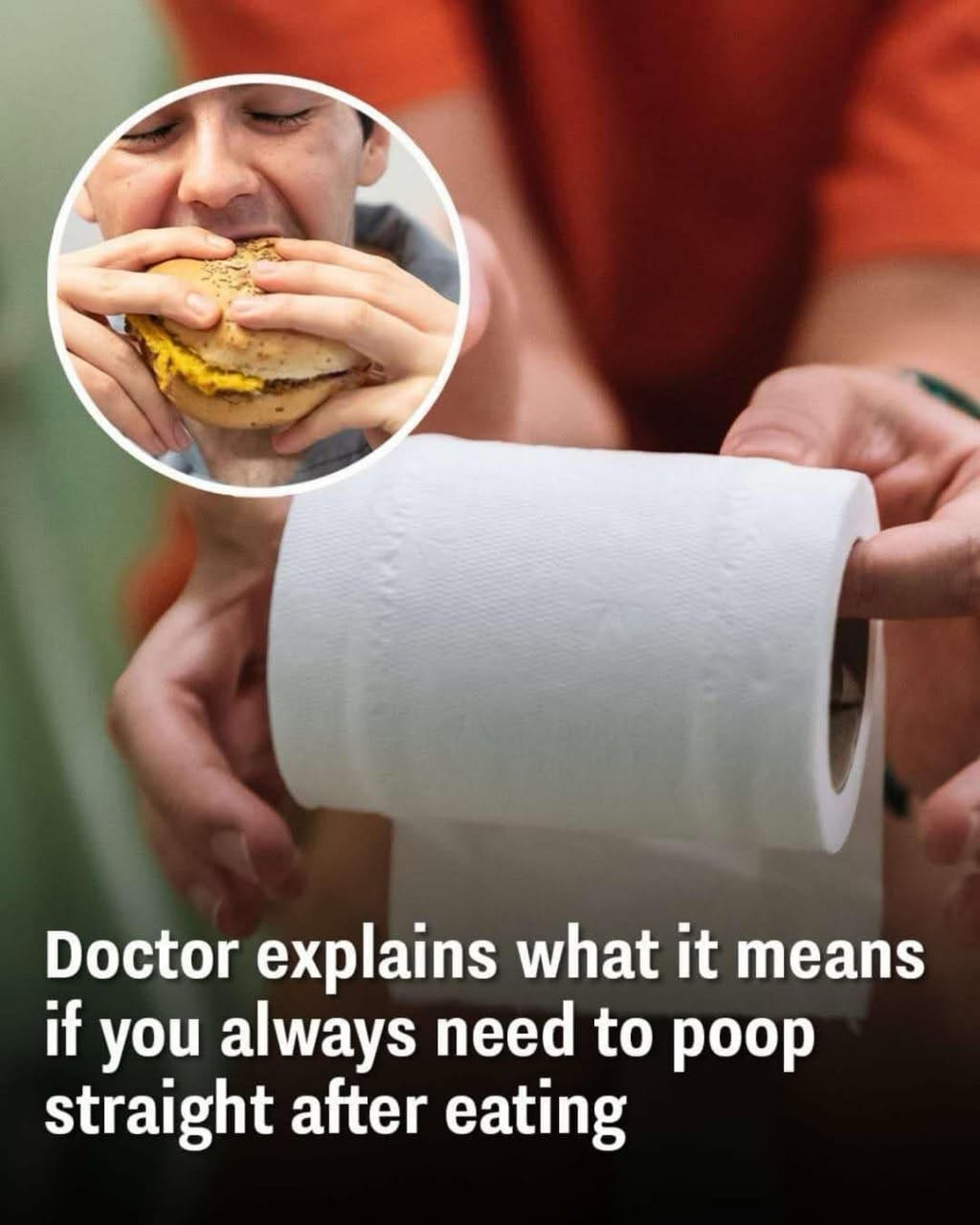
There are few things more inconvenient, and frankly more embarrassing, than sitting down to a delicious meal only to feel a sudden, urgent, and undeniable urge to run to the bathroom. For some people, this is an occasional annoyance. For others, it is a daily struggle that dictates their social lives, their dining choices, and their peace of mind. The viral image of a man enjoying a burger, juxtaposed with the stark reality of a roll of toilet paper, perfectly captures this dilemma. The text asks a question that millions of people have Googled in a panic: “Doctor explains what it means if you always need to poop straight after eating.” Is it a sign of a serious disease? Is it food poisoning? Or is it simply a normal, if inconvenient, bodily function? The answer is complex, involving a fascinating neurological reflex, the speed of digestion, and the delicate ecosystem
exaggerated. It is hyperactive. The colon contracts with excessive force and frequency, leading to a sudden, urgent need to defecate. This is often referred to as a “hyperactive gastrocolic reflex.” It is more common in people with irritable bowel syndrome (IBS), but it can occur in healthy individuals as well. The speed at which this happens varies. For some, the urge comes within minutes of eating. For others, it might be an hour later. The key is the connection between the stomach and the colon.
The Role of the Vagus Nerve
The gastrocolic reflex is mediated by the vagus nerve, a cranial nerve that connects the brain to the digestive system. The vagus nerve is responsible for the “rest and digest” functions of the body. When you eat, the vagus nerve is activated. It stimulates the production of digestive juices and promotes peristalsis—the wave-like muscle contractions that move food through
the digestive tract. In people with an overactive vagus nerve, the signal to the colon is stronger, leading to a more urgent need to go. This is why some people experience diarrhea or loose stools after eating. The food moves through the system too quickly, before water can be absorbed.
Is It Normal? The Spectrum of Severity
The frequency and urgency of the post-meal poop can range from a minor inconvenience to a debilitating condition. It is important to distinguish between normal and abnormal.
- The Normal Response: For many people, a mild urge to go after a meal is perfectly normal. It is simply the body’s way of regulating itself. If the stool is well-formed and there is no pain, it is generally not a cause for concern.
- The Hyperactive Reflex: If you have to rush to the bathroom immediately after eating, and the stool is loose or watery, it
- may be a sign of an overactive gastrocolic reflex. This can be triggered by certain foods, stress, or an underlying condition like IBS.
- The Warning Signs: If the urgency is accompanied by severe pain, cramping, blood in the stool, fever, or unintended weight loss, it is a red flag. These symptoms could indicate a more serious condition, such as inflammatory bowel disease (IBD), celiac disease, or an infection. In these cases, medical attention is essential.
Common Triggers: What Sets It Off?
Several factors can exacerbate the gastrocolic reflex and make the post-meal urge more urgent.
Fatty Foods: High-fat meals, like the burger in the image, are a common trigger. Fat slows down the emptying of the stomach, but it also stimulates the colon. This combination can lead to a sudden urge to go.
Caffeine: Coffee is a notorious stimulant for the colon. It can trigger the gastrocolic reflex within minutes
of consumption. This is why many people have their morning coffee and then immediately head to the bathroom.
Spicy Foods: Spicy foods can irritate the lining of the stomach and intestines, leading to increased motility and urgency.
Dairy: For people who are lactose intolerant, consuming dairy can cause a rapid onset of diarrhea and cramping.
Artificial Sweeteners: Some sugar alcohols, like sorbitol and mannitol, can have a laxative effect.
Stress and Anxiety: The gut-brain axis is a powerful connection. Stress can trigger the gastrocolic reflex, leading to urgency. This is why people often experience digestive issues before a big presentation or a stressful event.
Large Meals: Eating a very large meal stretches the stomach more, triggering a stronger reflex.
The Difference Between IBS and a Normal Reflex
Irritable Bowel Syndrome (IBS) is a common disorder that affects the large intestine. It is characterized by a combination of symptoms, including abdominal
pain, bloating, gas, and changes in bowel habits (diarrhea, constipation, or both). For people with IBS, the gastrocolic reflex is often exaggerated. They may experience urgent, painful diarrhea immediately after eating. The difference between IBS and a normal reflex is the intensity and the associated symptoms. If you have IBS, the post-meal urgency is often accompanied by significant pain and discomfort that interferes with your daily life.
When to See a Doctor
If you are experiencing frequent, urgent bowel movements after eating, it is important to talk to a doctor. While it is often a benign condition, it can also be a sign of something more serious. You should seek medical advice if you experience:
Blood in your stool
Severe abdominal pain
Unexplained weight loss
Fever
Symptoms that wake you up at night
A sudden change in your bowel habits that lasts for more than a few days
A family
history of colon cancer or inflammatory bowel disease
How to Manage the Urge
If you are dealing with a hyperactive gastrocolic reflex, there are several strategies you can use to manage it.
Keep a Food Diary: Identify the foods that trigger your symptoms. Common culprits include fatty foods, spicy foods, caffeine, and dairy. Once you know your triggers, you can avoid them or limit your intake.
Eat Smaller, More Frequent Meals: Instead of eating three large meals, try eating five or six small meals. This reduces the stretch on the stomach and lessens the reflex.
Slow Down: Eat slowly and chew your food thoroughly. This aids digestion and reduces the stress on your system.
Manage Stress: Practice relaxation techniques like deep breathing, meditation, or yoga. Stress is a major trigger for digestive issues.
Stay Hydrated: Drink plenty of water, but avoid drinking large amounts of fluids with meals, as this
can speed up digestion.
Try Probiotics: Probiotics can help balance the gut bacteria and improve digestive health. Foods like yogurt, kefir, and sauerkraut are good sources.
Talk to Your Doctor: If lifestyle changes are not enough, your doctor may recommend medication to slow down the digestive tract or manage specific conditions like IBS.
The Bottom Line
Needing to poop right after eating is a common experience. It is rooted in the gastrocolic reflex, a normal physiological process that helps the body digest food. However, when this reflex becomes hyperactive, it can be a source of significant distress. The image of the man with the burger is a reminder that our bodies are complex, and our digestive systems are sensitive to what we put into them. By understanding the triggers and listening to our bodies, we can manage this condition and enjoy our meals without the fear of a sudden rushto the bathroom. If you are concerned about your symptoms, do not hesitate to speak to a healthcare professional. Your gut health is a vital part of your overall well-being, and it deserves attention. The next time you feel that post-meal urge, remember that it is your body talking to you. Listen to it.